Discover how artificial intelligence is revolutionizing entrepreneurship with zero-employee companies. Learn how AI tools now manage marketing, sales, operations, and customer support—creating fully automated, scalable businesses.
Introduction
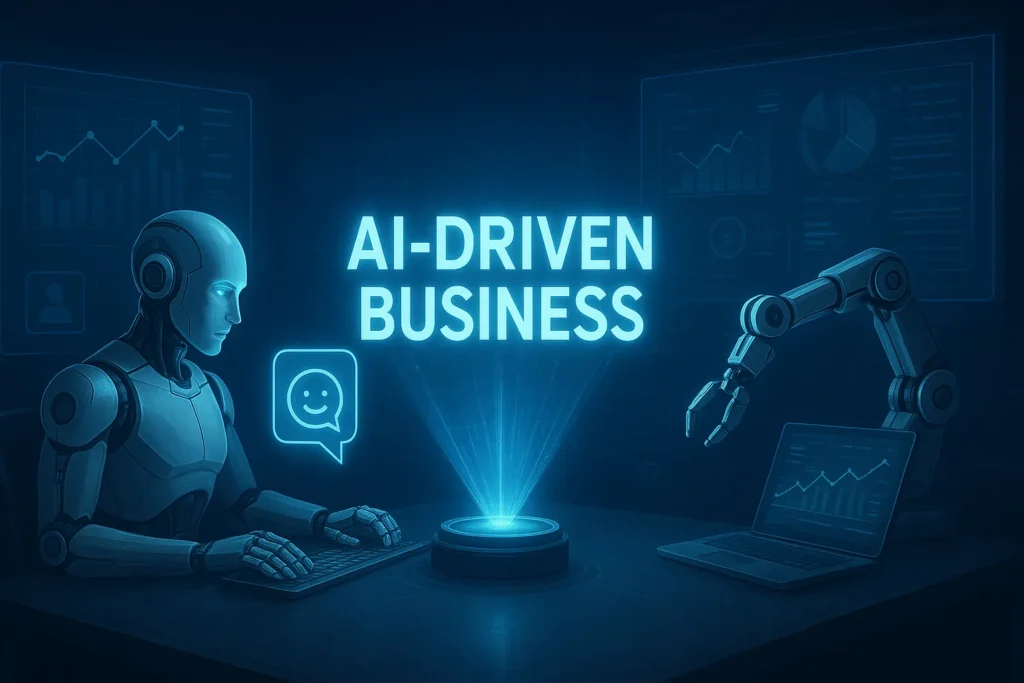
In 2025, the business landscape is undergoing a groundbreaking shift: the emergence of “zero-employee companies.” These are not science fiction—they’re real, fully operational businesses run entirely by AI systems with minimal or no human involvement.
From content creation to marketing automation, AI now performs tasks once reserved for teams of employees. Entrepreneurs are building fully automated companies that operate 24/7, scale globally, and require no payroll.
This blog explores how AI-powered zero-employee companies work, their benefits, real-world examples, and how you can leverage AI to build your own.
What Is a Zero-Employee Company?
A zero-employee company is a business that runs with no human staff, using AI tools, automation software, and machine learning algorithms to handle all key functions such as:
- Marketing and advertising
- Customer support
- Product creation and delivery
- Financial management
- Sales and lead generation
- Operations and analytics
The founder’s role shifts from managing people to orchestrating AI systems that work seamlessly together.
The Technology Behind Zero-Employee Companies
1. AI-Powered Tools and Platforms
Modern AI tools can now perform almost every business function. Here are some examples:
- ChatGPT / Claude / Gemini – for content creation, customer service, and product design
- Zapier / Make (Integromat) – for workflow automation
- Notion AI / ClickUp AI – for project and task management
- Shopify + AI plugins – for e-commerce automation
- HubSpot AI – for CRM, sales, and marketing automation
- QuickBooks AI – for accounting and financial reports
These tools communicate with each other using APIs and automation workflows, creating a self-operating business system.
2. The Core Pillars of an AI-Run Business
🔹 Marketing
AI creates content, runs ad campaigns, analyzes performance, and optimizes strategy. Tools like Jasper AI or Copy.ai can generate blogs, ads, and social media posts.
🔹 Sales
AI chatbots and CRM systems engage leads, answer questions, and close sales automatically.
🔹 Operations
Workflow tools like Zapier and Make ensure tasks flow from one app to another without human input.
🔹 Customer Support
AI chatbots like Intercom AI or Drift resolve issues instantly using natural language.
🔹 Analytics
AI-driven dashboards track KPIs, optimize performance, and even suggest strategic improvements.
Real-World Examples of Zero-Employee Companies
1. AI-Driven E-Commerce Stores
Dropshipping websites now use AI for product selection, marketing, pricing, and customer support, generating revenue without a single employee.
2. Automated Content Channels
AI creates YouTube videos, blogs, newsletters, and podcasts, fully automated—from scriptwriting to publishing.
3. SaaS Startups with AI Management
Founders use AI to manage customer onboarding, bug tracking, and feature updates—all automated.
4. Financial Trading Bots
Some businesses rely entirely on AI trading systems for stock or crypto investments, with no human decisions.
Benefits of Zero-Employee Companies
1. Low Operational Costs
No salaries, HR management, or office space needed.
2. 24/7 Operation
AI never sleeps—your business runs globally around the clock.
3. Scalability
Easily scale operations without hiring more staff.
4. Efficiency & Consistency
AI ensures every process is optimized and error-free.
5. Faster Growth
With automation handling tasks instantly, businesses can grow exponentially.
Challenges and Risks
Even though AI-run businesses sound futuristic, they come with challenges:
- Legal & Compliance: Regulations may not yet cover AI-operated entities.
- Lack of Human Creativity: AI still struggles with emotional intelligence.
- System Failures: Over-reliance on automation can cause issues if tools break.
- Ethical Concerns: Who is accountable for AI decisions?
The Future of AI-Driven Entrepreneurship
Experts predict a rise in “solo founders with AI teams”—entrepreneurs managing multiple businesses with zero staff. As AI agents become more advanced, these companies could collaborate, negotiate deals, and adapt strategies autonomously.
Soon, AI CEOs may become the norm, making decisions faster and with more data than any human.
How to Build Your Own Zero-Employee Company
Step 1: Choose a Niche
Select a business model suitable for automation—like digital products, e-commerce, affiliate marketing, or SaaS.
Step 2: Set Up Automation Stack
Use a combination of:
- AI for content (ChatGPT, Jasper)
- Automation (Zapier, Make)
- Analytics (Google Analytics, AI dashboards)
- CRM (HubSpot AI)
Step 3: Integrate Workflows
Link all tools so tasks are automated end-to-end.
Step 4: Monitor & Optimize
Regularly review AI output and refine automations.
Conclusion
The concept of zero-employee companies is no longer futuristic—it’s here. With AI now capable of running marketing, operations, and sales, entrepreneurs can focus on strategy and innovation while machines handle execution.
In the coming decade, we may see a world where most small businesses operate autonomously, driven entirely by AI systems—creating a new era of efficiency, scalability, and opportunity.
FAQ’s
1. What is a zero-employee company?
A zero-employee company is a business run entirely by AI tools and automation systems without any human employees.
2. Can AI really run a company alone?
Yes. With today’s advanced AI systems for marketing, sales, operations, and support, many businesses operate fully autonomously.
3. What are the benefits of AI-run businesses?
Key benefits include lower costs, 24/7 operation, faster scalability, and consistent performance.
4. What tools do zero-employee companies use?
Popular tools include ChatGPT, Zapier, Notion AI, Shopify, HubSpot, and QuickBooks AI.
5. Are zero-employee companies legal?
Yes, but laws around AI management and accountability are still evolving.
6. Can I start a zero-employee business as a solo founder?
Absolutely. Many solopreneurs already run fully automated AI-powered businesses today.
7. What industries can benefit from AI automation?
E-commerce, digital marketing, SaaS, content creation, and financial trading are leading sectors.
Disclaimer
This article is for educational purposes only and does not constitute business, financial, or legal advice. Always consult professionals before launching AI-powered ventures.
Internal Link :-
- Best Home Workouts Without Equipment: Build Strength Anytime, Anywhere
- 7-Day Healthy Meal Plan for Beginners: Simple & Delicious Recipes
- Sugs Lloyd IPO 2025 – Dates, Price Band, GMP, Allotment & Review
- Snehaa Organics IPO 2025 – Price Band, GMP, Subscription, Allotment & Detailed Review
- Goel Construction Company Ltd IPO: GMP, Price Band, Allotment, and Listing Details
Can you be more specific about the content of your article? After reading it, I still have some doubts. Hope you can help me.