Discover how young political leaders are reshaping democracy with fresh ideas, digital strategies, and inclusive governance for a better future.
Introduction
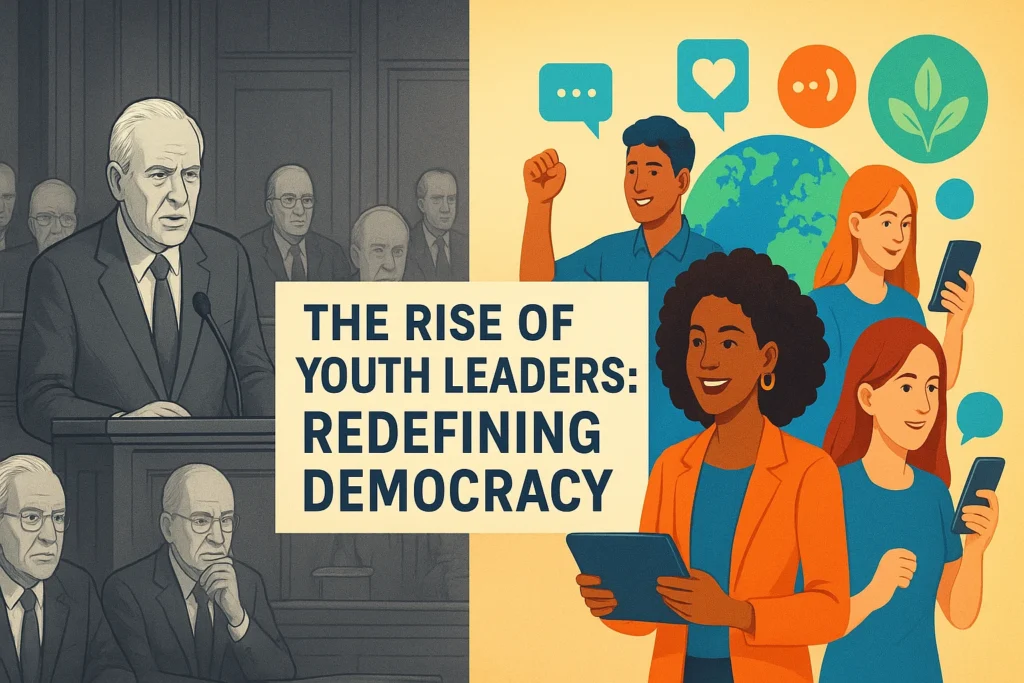
Democracy thrives when it evolves with the times. Today, the world is witnessing a powerful wave of youth leaders stepping into politics, breaking stereotypes, and redefining governance. Unlike traditional politicians, these next-generation leaders bring innovation, digital fluency, inclusivity, and people-first approaches.
From tackling climate change to promoting equality and harnessing technology, young politicians are proving that age is no barrier to effective leadership. This blog explores how youth leaders are reshaping democracy, their unique strengths, real-world examples, challenges, and the global future of political leadership.
Why Youth Leadership Matters in Modern Democracy
Fresh Ideas & Perspectives
Youth leaders are not burdened by outdated political ideologies. They bring fresh perspectives on technology, climate action, gender equality, and education reform.
Closer Connection with Citizens
Young politicians resonate strongly with Millennials and Gen Z. Their ability to connect through social media builds stronger trust and engagement with the public.
Agility in Crisis Management
The next-gen leaders are agile, tech-savvy, and adaptable—qualities that help in managing crises like pandemics, economic downturns, or climate disasters.
Key Areas Where Youth Leaders Are Redefining Democracy
1. Climate Action & Sustainability
Young leaders are at the forefront of climate advocacy.
- Example: Jacinda Ardern (New Zealand’s former PM, elected at 37) prioritized climate policies and renewable energy.
- Benefit: A stronger focus on long-term sustainability for future generations.
2. Digital Transformation of Politics
Digital-native politicians are using social media, AI, and blockchain for transparency and citizen engagement.
- Example: Sanna Marin, former Finnish PM (34), actively used digital platforms for policymaking discussions.
- Benefit: A participatory democracy with direct communication channels.
3. Social Equality & Inclusion
Youth leaders push for diversity, inclusivity, and gender equality.
- Example: Alexandria Ocasio-Cortez (AOC) in the U.S. represents progressive policies and inclusion.
- Benefit: A more representative democracy that values every voice.
4. Innovation in Governance
Instead of traditional bureaucracy, young leaders experiment with e-governance, start-up ecosystems, and people-first policies.
- Example: Emmanuel Macron (elected French President at 39) implemented reforms to modernize the economy.
- Benefit: Efficient governance powered by innovation.
5. Bridging Generational Gaps
Young leaders act as a bridge between older politicians and the new voter base. They understand both worlds, enabling balanced decision-making.
Global Examples of Next-Gen Political Leaders
- Emmanuel Macron (France) – One of the youngest world leaders, elected President at 39.
- Sanna Marin (Finland) – Became PM at 34, focusing on social welfare and inclusivity.
- Jacinda Ardern (New Zealand) – Elected at 37, known for empathetic leadership.
- Alexandria Ocasio-Cortez (USA) – Youngest woman ever elected to U.S. Congress at 29.
- Bhavya Bishnoi (India) – Emerging youth face in Indian politics, bringing modern perspectives.
These examples highlight how youth leaders are rewriting the playbook of democracy worldwide.
Benefits of Youth Leadership in Politics
- Stronger representation of younger demographics
- Faster adoption of technology in governance
- Progressive policies aligned with global challenges
- Increased voter participation among youth
- Breaking stereotypes and refreshing the political landscape
Challenges Faced by Youth Leaders
Lack of Political Experience
Skepticism arises over their ability to manage governance without decades of experience.
Resistance from Established Powers
Older political elites may resist the fresh perspectives of young leaders.
Balancing Popularity with Policy
Social media fame doesn’t always translate into long-term policy success.
High Expectations from Citizens
People expect rapid results, which may not always be possible due to systemic limitations.
The Future of Democracy with Youth Leaders
The rise of youth leaders signals a paradigm shift in politics. With digital innovation, global connectivity, and fresh ideas, next-gen politicians are creating inclusive, sustainable, and people-driven democracies.
Future politics will likely see:
- AI-driven decision-making support
- Youth-led climate action coalitions
- Increased women participation in governance
- Blended leadership models where young leaders work alongside experienced policymakers
Conclusion
The rise of youth leaders is not just a political trend—it is a revolution in democracy. These leaders bring energy, empathy, and innovation, redefining governance for the digital age. By addressing challenges with fresh perspectives, youth leaders are proving that democracy is stronger when it embraces generational diversity.
The next decade will belong to visionary young politicians who turn challenges into opportunities, ensuring democracy remains relevant, inclusive, and future-ready.
Disclaimer
This blog is for educational purposes only and does not promote or endorse any political party, leader, or ideology.
FAQ’s
1. Why are youth leaders important in democracy?
Youth leaders bring fresh perspectives, digital fluency, and inclusivity to governance, making democracy more relevant and future-oriented.
2. Who are some famous young politicians in the world?
Notable youth leaders include Emmanuel Macron (France), Jacinda Ardern (New Zealand), Sanna Marin (Finland), and Alexandria Ocasio-Cortez (USA).
3. How do young leaders use technology in politics?
They use social media, AI-driven tools, and e-governance platforms to engage citizens, increase transparency, and deliver efficient policies.
4. What challenges do young politicians face?
Challenges include lack of experience, resistance from older politicians, balancing popularity with policy, and managing high public expectations.
5. Can youth leaders improve voter participation?
Yes, young leaders inspire Millennials and Gen Z to engage in politics, increasing voter turnout and democratic participation.
6. Are youth leaders better at addressing global issues?
Yes, younger politicians often prioritize global issues like climate change, sustainability, and digital innovation.
7. What is the future of youth leadership in democracy?
The future includes more inclusive policies, increased women participation, tech-driven governance, and collaborative leadership models.
Internal Link :-
- Best Home Workouts Without Equipment: Build Strength Anytime, Anywhere
- 7-Day Healthy Meal Plan for Beginners: Simple & Delicious Recipes
- 10 Best Apps to Save Money in 2025: Smart Budgeting & Financial Freedom
- How to Start Investing with Just $100 in 2025
- Best Side Hustles for Beginners to Make $500/Month in 2025
Can you be more specific about the content of your article? After reading it, I still have some doubts. Hope you can help me. https://accounts.binance.com/en/register?ref=JHQQKNKN
Your point of view caught my eye and was very interesting. Thanks. I have a question for you. https://www.binance.info/pt-BR/register?ref=GJY4VW8W
Your point of view caught my eye and was very interesting. Thanks. I have a question for you.