Explore how telemedicine is transforming India’s healthcare landscape, its benefits, challenges, and whether it’s the future of healthcare delivery or just a short-term solution.
Introduction
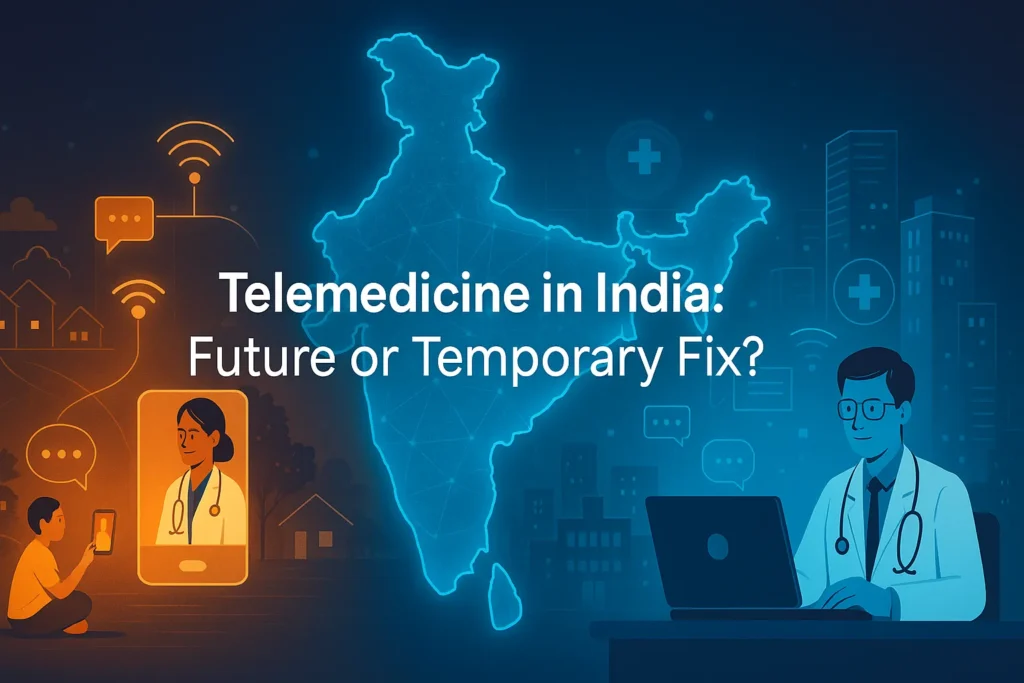
The COVID-19 pandemic revolutionized the way healthcare is delivered, pushing India’s healthcare ecosystem to adopt telemedicine almost overnight. What began as a necessity during lockdowns has now become a major trend shaping the country’s healthcare future. But as life returns to normal, a pressing question arises: Is telemedicine India’s future, or was it just a temporary fix during a crisis?
Understanding Telemedicine
Telemedicine refers to the remote diagnosis, consultation, and treatment of patients using digital communication technologies—such as video calls, apps, and online health platforms. It bridges the gap between patients and healthcare professionals, especially in areas where medical access is limited.
Types of Telemedicine Services in India
- Teleconsultation: Remote consultations via apps or video calls.
- Telemonitoring: Tracking patient health data like blood pressure or sugar levels through connected devices.
- Telepharmacy: Online prescription services and medicine deliveries.
- Tele-education: Digital training and knowledge sharing for medical professionals.
Rise of Telemedicine in India
1. COVID-19 as the Catalyst
Before 2020, telemedicine adoption in India was slow. However, the pandemic changed everything. Physical distancing, hospital overload, and travel restrictions led to a surge in online consultations. Platforms like Practo, 1mg, Apollo 24/7, Tata Health, and mfine saw exponential growth—some reporting over 200% increase in consultations.
2. Government Push
The Indian government launched the National Telemedicine Service – eSanjeevani, offering free doctor consultations. By 2024, it had facilitated over 20 crore (200 million) consultations, proving telemedicine’s potential to scale healthcare accessibility.
Benefits of Telemedicine in India
1. Bridging Rural-Urban Healthcare Divide
Over 65% of India’s population lives in rural areas, while most doctors are concentrated in urban centers. Telemedicine helps connect remote patients with urban specialists, reducing travel time and cost.
2. Cost and Time Efficiency
Virtual consultations cost significantly less than in-person visits. Patients save money on travel, accommodation, and lost work hours—making healthcare more affordable.
3. Access to Specialists
Patients in small towns can now access cardiologists, neurologists, and mental health professionals who might otherwise be unavailable locally.
4. Continuity of Care
Telemedicine enables regular follow-ups and health monitoring, crucial for managing chronic diseases like diabetes, hypertension, and asthma.
5. Boosting Preventive Healthcare
With easy access to doctors, Indians are increasingly seeking early advice, leading to timely diagnoses and better disease prevention.
Challenges Facing Telemedicine in India
1. Digital Divide
Only a portion of India’s population has reliable internet access. Poor connectivity and lack of digital literacy hinder telemedicine adoption in rural areas.
2. Data Privacy & Security
Healthcare data is sensitive. The absence of stringent cybersecurity protocols can lead to privacy breaches and misuse of patient data.
3. Regulatory Ambiguities
Although India’s Telemedicine Practice Guidelines (2020) clarified some legal aspects, concerns remain over liability, cross-border consultations, and data ownership.
4. Lack of Physical Examination
Certain conditions require hands-on evaluation or diagnostic testing, which telemedicine cannot fully replace.
5. Doctor Resistance & Patient Trust Issues
Some doctors hesitate to adopt teleconsultations, citing lack of personal interaction or diagnostic limitations. Likewise, some patients still prefer face-to-face visits.
Case Studies: Telemedicine Success in India
eSanjeevani – A Public Healthcare Revolution
India’s government-led eSanjeevani initiative has been a game changer, especially in rural and semi-urban regions. With over 120,000 doctors and 200 million consultations, it showcases how telemedicine can democratize healthcare.
Apollo TeleHealth
Apollo Hospitals’ telehealth network connects over 70,000 remote locations, including prisons, oil rigs, and rural health centers. Their success highlights how private healthcare can complement public initiatives.
Practo & mfine
Private startups like Practo and mfine have empowered millions of Indians to access virtual healthcare on demand, contributing to a booming $10 billion Indian telehealth market (projected by 2026).
Is Telemedicine the Future or Just a Temporary Fix?
The Case for the Future
- Growing smartphone penetration and cheap internet (thanks to Jio revolution).
- Increasing health awareness post-COVID.
- Government integration with the Ayushman Bharat Digital Mission (ABDM).
- AI-powered diagnostic tools and wearable health devices enhancing accuracy.
The Case for a Temporary Fix
- Lack of infrastructure in Tier-3 and rural regions.
- Resistance from traditional healthcare institutions.
- Dependence on hybrid models (digital + physical care).
Balanced View
Telemedicine is not a complete replacement for traditional healthcare, but rather an essential extension. India’s healthcare future will likely adopt a hybrid model, where physical care and telemedicine coexist to improve accessibility, affordability, and efficiency.
Future Outlook: What Lies Ahead?
- Integration with AI and IoT: Smart wearables and AI-based diagnosis will enhance virtual care.
- Stronger Regulation: Data privacy laws and standardization will build trust.
- Regional Language Support: Expanding teleconsultation apps to local languages will widen adoption.
- Public-Private Partnerships: Collaboration between government and tech startups will expand reach.
Telemedicine’s growth will continue, but its sustainability depends on digital inclusivity, policy support, and patient trust.
Conclusion
Telemedicine in India is more than just a pandemic-era solution—it’s the foundation of a digitally connected healthcare ecosystem. With policy support, innovation, and infrastructure investment, it can revolutionize how 1.4 billion Indians access healthcare. The question is no longer “if” telemedicine will stay, but “how fast” it will evolve to meet India’s growing healthcare demands.
FAQ’s
1. What is telemedicine?
Telemedicine involves providing healthcare services remotely through digital tools like video calls, apps, and online platforms, making healthcare accessible from anywhere.
2. How has telemedicine grown in India?
Telemedicine surged after the COVID-19 pandemic, with platforms like eSanjeevani and Practo connecting millions of patients to doctors across India.
3. Is telemedicine legal in India?
Yes. The Telemedicine Practice Guidelines (2020) issued by the Medical Council of India and NITI Aayog provide a clear legal framework for virtual consultations.
4. What are the benefits of telemedicine in India?
It bridges the rural-urban gap, reduces costs, saves time, ensures continuity of care, and enhances access to medical specialists.
5. What challenges does telemedicine face?
Limited internet access, data privacy concerns, regulatory gaps, and the inability to perform physical exams remain major challenges.
6. Will telemedicine replace traditional healthcare?
No, but it complements it. A hybrid model combining teleconsultations with in-person care will define the future of healthcare in India.
7. What is the future of telemedicine in India?
With AI, digital records, and government support through ABDM, telemedicine will become a permanent and vital part of India’s healthcare system.
Disclaimer
This article is for educational and informational purposes only. It does not provide medical or legal advice. Readers should consult qualified healthcare professionals for medical concerns.
Internal Link :-
- The Truth About Creatine: Benefits, Myths & Everything You Need to Know
- Beginner’s Guide to Strength Training at Home (2025 Edition)
- Top 10 Superfoods to Boost Immunity in 2025
- How to Lose Belly Fat Without Starving Yourself – Proven Healthy Strategies
- Do You Really Need Supplements? Science-Backed Answers



Can you be more specific about the content of your article? After reading it, I still have some doubts. Hope you can help me.