Discover the ideal bedtime for kids, teens, adults, and seniors. Learn how much sleep you need by age and improve your health with smarter sleep habits.
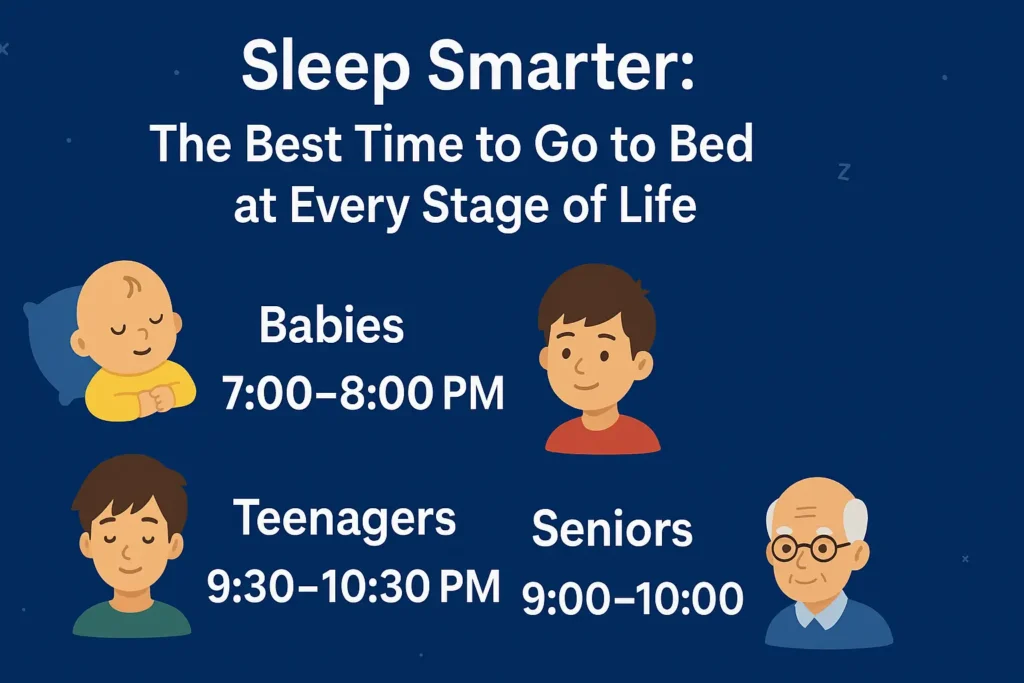
Sleep Smarter: The Best Time to Go to Bed at Every Stage of Life
Sleep is not just rest—it’s the foundation of good health, productivity, and happiness. But here’s the secret: the best time to go to bed changes as you age. From toddlers to seniors, your body has different sleep needs at different stages of life.
In this blog, let’s explore the perfect bedtime by age group, backed by science and health experts.
Why Bedtime Matters More Than You Think
- Boosts growth & brain development (kids and teens).
- Improves focus & productivity (students, professionals).
- Reduces stress & disease risk (adults).
- Supports memory & mood (seniors).
When you sleep at the right time, you’re not just resting—you’re recharging your entire system.
Best Bedtime by Age
👶 Babies (0–2 years)
- Sleep needed: 12–16 hours daily (with naps).
- Best bedtime: 7:00–8:00 PM.
Babies thrive with early and consistent bedtimes to support rapid growth.
🧒 Children (3–12 years)
- Sleep needed: 9–12 hours.
- Best bedtime: 8:00–9:00 PM.
A regular bedtime improves learning, attention span, and overall health.
🧑 Teenagers (13–18 years)
- Sleep needed: 8–10 hours.
- Best bedtime: 9:30–10:30 PM.
Even though teens are night owls, earlier sleep boosts memory and lowers anxiety.
👩💼 Young Adults (19–30 years)
- Sleep needed: 7–9 hours.
- Best bedtime: 10:00–11:00 PM.
Going to bed before midnight helps with productivity, fitness, and stress reduction.
🧔 Adults (31–60 years)
- Sleep needed: 7–9 hours.
- Best bedtime: 10:00–11:00 PM.
Consistent early sleep lowers risks of heart disease, diabetes, and burnout.
👴 Seniors (60+ years)
- Sleep needed: 7–8 hours.
- Best bedtime: 9:00–10:00 PM.
Since seniors naturally wake earlier, an earlier bedtime ensures proper rest.
Tips for Smarter Sleep
✅ Keep a consistent sleep schedule.
✅ Limit screens an hour before bed.
✅ Avoid caffeine late in the day.
✅ Create a cool, dark, and quiet room.
✅ Try relaxing habits like reading or meditation.
FAQs
Q1: Is it bad to sleep late but wake up late?
Yes, it disrupts your circadian rhythm and reduces sleep quality, even if total hours are met.
Q2: Do sleep needs decrease with age?
Yes, babies need the most sleep, while adults and seniors function well on 7–8 hours.
Q3: Can naps replace bedtime sleep?
No, naps can refresh you, but deep nighttime sleep is essential for brain and body repair.
Final Thoughts
The best time to go to bed depends on your age. By adjusting your bedtime according to your life stage, you’ll improve focus, energy, mood, and long-term health.
Remember: smarter sleep equals a smarter life. 😴✨
Disclaimer
This blog is for educational purposes only. For medical advice or sleep disorders, consult a healthcare professional.



Your article helped me a lot, is there any more related content? Thanks! https://accounts.binance.com/ES_la/register-person?ref=VDVEQ78S
Thanks for sharing. I read many of your blog posts, cool, your blog is very good. https://www.binance.com/ar-BH/register?ref=UT2YTZSU