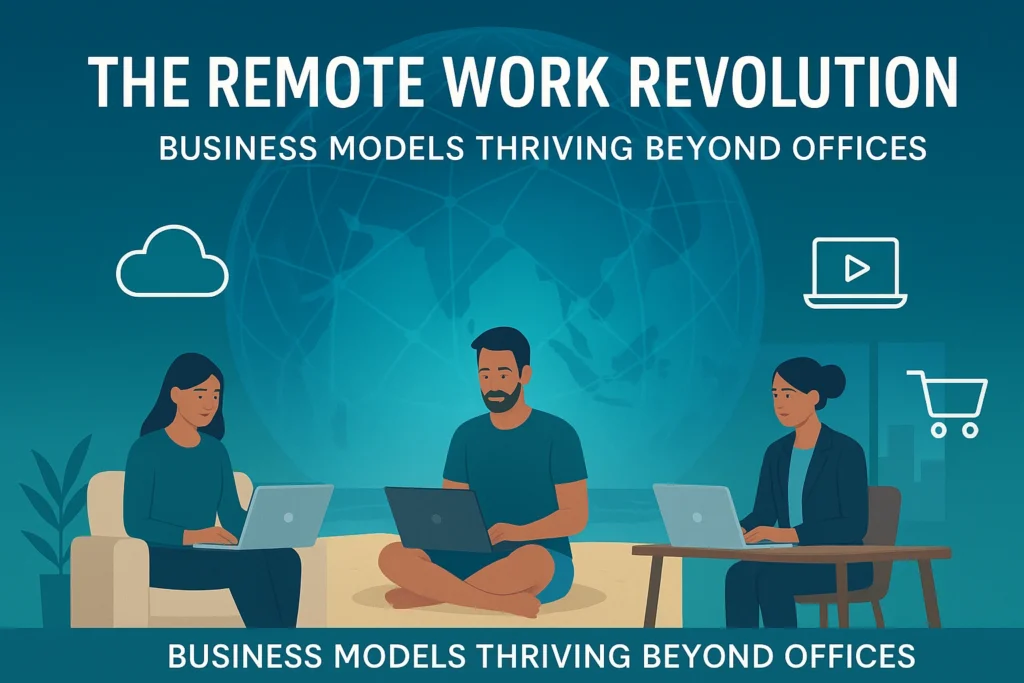
Explore how the remote work revolution is reshaping business models worldwide. Discover thriving industries, benefits, and opportunities for entrepreneurs in the work-from-anywhere era.
Introduction
The COVID-19 pandemic reshaped the way we work, and what started as a temporary adaptation has evolved into a global revolution. Remote work is no longer just an option—it has become a strategic advantage for businesses, freelancers, and entrepreneurs.
From fully distributed teams to hybrid setups, the work-from-anywhere movement is fueling the rise of new business models that thrive without traditional offices. This shift has created opportunities for startups, service providers, and professionals who can tap into the future of work.
In this blog, we’ll explore how remote work is transforming industries, the business models thriving in this ecosystem, and the benefits and challenges of building a business beyond the office.
The Rise of Remote Work
Remote work adoption skyrocketed during the pandemic, but even after offices reopened, many businesses continued offering flexible work arrangements.
Key Drivers of Remote Work
- Access to a global talent pool.
- Reduction in overhead and infrastructure costs.
- Employee demand for work-life balance.
- Technological advancements in cloud computing, communication, and project management tools.
- Environmental benefits from reduced commuting.
Business Models Thriving Beyond Offices
1. Distributed SaaS Companies
- Example: GitLab, a 100% remote software development platform.
- How They Thrive: Remote teams collaborate globally to develop, sell, and support products without a central office.
- Benefit: Lower costs, global talent acquisition, 24/7 customer support.
2. Remote-First Freelancing Platforms
- Example: Upwork and Fiverr connect freelancers with clients worldwide.
- How They Thrive: Marketplaces enable gig workers to provide services like content writing, design, coding, and consulting.
- Benefit: Scalable, commission-based revenue models with low operational overhead.
3. Virtual Event & Conference Businesses
- Example: Hopin scaled rapidly by offering virtual event solutions.
- How They Thrive: Replace expensive in-person events with immersive digital experiences.
- Benefit: Larger global reach, lower logistics costs, high scalability.
4. Remote Consulting & Coaching
- Example: Business coaches, fitness trainers, and life coaches now operate fully online.
- How They Thrive: Leverage video calls, webinars, and subscription-based models.
- Benefit: Low investment, high personal branding potential, recurring revenue.
5. E-Learning & Online Education Startups
- Example: Coursera, Udemy, and niche skill-based academies.
- How They Thrive: Remote-first learning platforms provide courses worldwide.
- Benefit: Evergreen demand as upskilling and reskilling remain top priorities.
6. Remote E-Commerce & D2C Brands
- Example: Many Shopify and Amazon-based sellers run businesses fully remote.
- How They Thrive: Virtual teams manage supply chains, digital marketing, and customer service.
- Benefit: Freedom from physical offices and reduced operational costs.
7. Digital Marketing & Creative Agencies
- Example: Remote-first agencies offering SEO, social media, and branding.
- How They Thrive: Teams of designers, marketers, and strategists work remotely with global clients.
- Benefit: Flexible scaling and ability to tap into diverse expertise.
Benefits of Remote-Work Business Models
- Cost Savings: Reduced rent, utilities, and office expenses.
- Talent Access: Ability to hire the best talent globally.
- Scalability: Easier to scale without physical constraints.
- Employee Satisfaction: Better work-life balance increases productivity.
- Sustainability: Lower carbon footprint due to less commuting.
Challenges of Thriving Without Offices
- Communication barriers in distributed teams.
- Risk of employee isolation and burnout.
- Security and data privacy issues.
- Difficulty in maintaining company culture remotely.
- Time-zone management for global teams.
Future of Remote Work
- Hybrid Work Models: Blending office and remote flexibility.
- Metaverse Offices: Virtual reality-driven workplaces.
- AI & Automation: Smarter collaboration tools.
- Decentralized Companies (DAOs): Blockchain-based governance of businesses.
The remote work revolution is here to stay, and businesses that embrace it will unlock new levels of efficiency, flexibility, and profitability.
Conclusion
The shift to remote-first business models is more than just a response to global events—it’s a fundamental transformation of how businesses operate.
From SaaS companies to freelancers and e-learning startups, industries are thriving beyond physical offices. For entrepreneurs, the future of work is borderless, digital, and filled with opportunity.
Now is the time to adapt, innovate, and build businesses that thrive in the remote era.
Disclaimer
This blog is for educational purposes only and does not constitute financial, business, or legal advice. Entrepreneurs should consult experts before making strategic decisions.
FAQ’s
1. What is the remote work revolution?
It refers to the global shift toward remote-first and hybrid business models where teams operate beyond traditional office spaces.
2. Which businesses thrive with remote work?
SaaS companies, freelancing platforms, online education startups, digital marketing agencies, and e-commerce brands are top examples.
3. What are the benefits of running a remote business?
Lower costs, global hiring, scalability, employee satisfaction, and sustainability.
4. What challenges do remote-first businesses face?
Communication gaps, employee isolation, security concerns, and time-zone differences.
5. How can businesses maintain culture remotely?
Through virtual team-building activities, regular check-ins, and fostering transparent communication.
6. Will remote work replace offices completely?
Not entirely—hybrid models combining remote and physical workspaces are likely to dominate.
7. What technologies enable remote-first businesses?
Cloud tools, project management apps, video conferencing, AI, and cybersecurity solutions.
Internal Link :-
- Best Home Workouts Without Equipment: Build Strength Anytime, Anywhere
- 7-Day Healthy Meal Plan for Beginners: Simple & Delicious Recipes
- Sugs Lloyd IPO 2025 – Dates, Price Band, GMP, Allotment & Review
- Snehaa Organics IPO 2025 – Price Band, GMP, Subscription, Allotment & Detailed Review
- Goel Construction Company Ltd IPO: GMP, Price Band, Allotment, and Listing Details