Discover how digital payments and fintech innovations are shaping the future of small and medium enterprises (SMEs). Learn about trends, benefits, and technologies driving SME growth.
Introduction
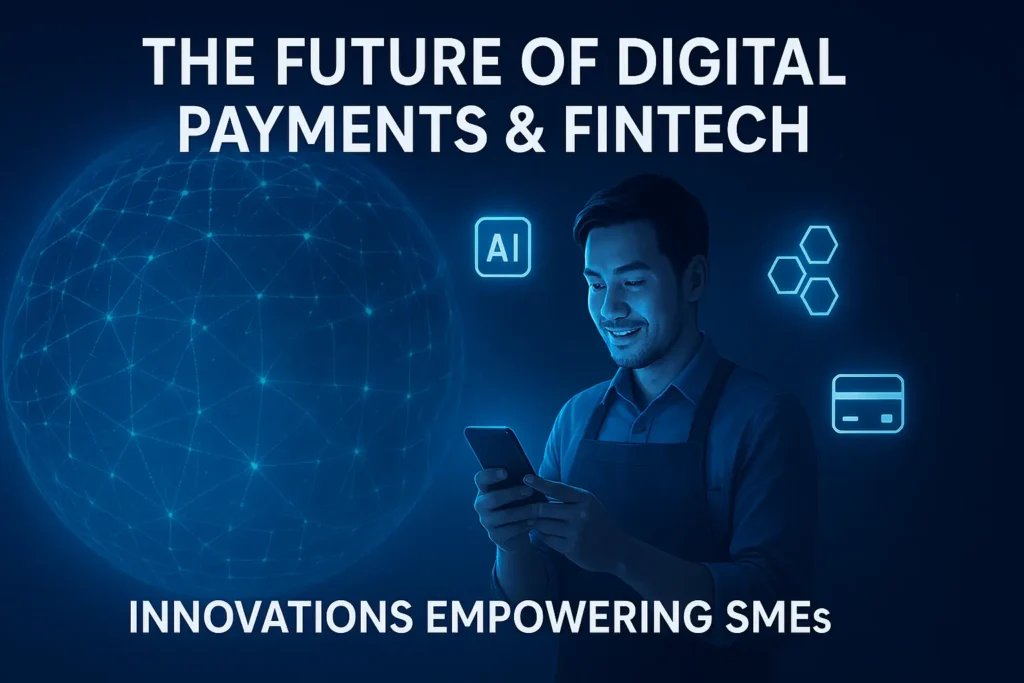
The world of business is transforming rapidly, and small and medium enterprises (SMEs) are at the center of this change. With the rise of digital payments and fintech innovations, SMEs now have access to financial tools that were once reserved for large corporations. From mobile wallets and contactless payments to AI-powered lending and blockchain solutions, technology is empowering SMEs to compete in global markets with more agility and efficiency.
In this blog, we’ll explore the future of digital payments, the fintech innovations reshaping SMEs, and how businesses can leverage these technologies to thrive in the coming decade.
The Rise of Digital Payments for SMEs
Digital payments have become the lifeblood of modern commerce. Whether it’s accepting QR code payments in a local shop or enabling cross-border e-commerce transactions, SMEs rely heavily on fast, secure, and cost-effective payment methods.
Key Drivers of Digital Payment Growth
- Increasing smartphone penetration and internet access.
- Government initiatives promoting cashless economies.
- Customer preference for convenient, contactless solutions.
- Fintech partnerships reducing transaction costs.
Fintech Innovations Transforming SMEs
1. Mobile Wallets and Contactless Payments
Apps like Paytm, Google Pay, and Apple Pay allow SMEs to accept payments instantly with minimal infrastructure. Contactless payments reduce checkout time and enhance customer experience.
Benefit for SMEs: Faster transactions, reduced cash handling, and higher customer satisfaction.
2. Buy Now, Pay Later (BNPL) for SMEs
BNPL isn’t just for consumers. Platforms now allow SMEs to purchase raw materials or inventory on credit and pay later without heavy interest.
Example: India’s Lendingkart and Razorpay Capital offering instant credit lines.
Benefit: Improved cash flow and easier inventory management.
3. AI-Powered Credit Scoring & Lending
Traditional banks often reject SMEs due to lack of collateral. Fintechs use AI-driven credit scoring based on transaction data, utility bills, and digital footprint.
Example: Companies like KredX and Tala offering AI-powered SME loans.
Benefit: Access to faster and fairer loans.
4. Blockchain & Cross-Border Payments
Blockchain ensures secure, transparent, and low-cost cross-border payments. SMEs in export-import sectors benefit by reducing transaction fees and delays.
Example: RippleNet and Stellar offering blockchain-based settlement systems.
Benefit: Global trade with minimal cost and maximum trust.
5. Embedded Finance & API Banking
Instead of relying on traditional banks, SMEs can integrate financial services directly into their platforms.
Example: E-commerce platforms embedding instant loans, insurance, and payments within their apps.
Benefit: Seamless financial experience for businesses and customers.
6. Digital Accounting & Tax Tools
Fintechs are integrating automated GST filing, invoicing, and bookkeeping tools into payment systems.
Example: Zoho Books and QuickBooks simplifying SME finance management.
Benefit: Saves time, reduces compliance errors, and ensures transparency.
How Digital Payments Empower SMEs
- Global Reach: SMEs can sell beyond borders without complex banking systems.
- Lower Costs: Reduced transaction fees compared to traditional banking.
- Better Customer Experience: Quick, safe, and convenient payment options.
- Data Insights: Payments data help SMEs analyze customer trends and improve services.
Future Trends in Digital Payments for SMEs
- Cryptocurrency adoption for B2B and cross-border transactions.
- Voice-based payments via smart assistants.
- AI-driven fraud detection for safer transactions.
- IoT-based payment systems (smart vending machines, connected devices).
- Green fintech promoting sustainable, eco-friendly transactions.
Challenges SMEs Face in Digital Payment Adoption
- Cybersecurity threats and data breaches.
- Lack of digital literacy in smaller towns.
- Regulatory complexities in cross-border fintech operations.
- High competition among fintech providers.
Conclusion
The future of SMEs is deeply tied to digital payments and fintech innovation. By adopting mobile wallets, AI-driven lending, blockchain payments, and embedded finance, SMEs can unlock new growth opportunities and compete at a global scale.
In the coming years, SMEs that embrace these innovations will not just survive but thrive in a digital-first economy.
Disclaimer
This blog is for educational purposes only. It does not provide financial, legal, or investment advice. SMEs should consult professional advisors before making business or financial decisions.
FAQ’s
1. Why are digital payments important for SMEs?
Digital payments provide faster transactions, better customer experiences, and access to data insights that help SMEs grow and compete globally.
2. What fintech innovations benefit SMEs the most?
Mobile wallets, BNPL, AI-powered lending, blockchain payments, and digital accounting tools are some of the most impactful innovations.
3. Can small businesses adopt blockchain payments?
Yes. Blockchain allows SMEs to reduce costs in cross-border transactions while improving security and transparency.
4. How does AI help SMEs in fintech?
AI improves credit scoring, fraud detection, customer service, and personalized financial solutions for SMEs.
5. What are the risks of digital payments for SMEs?
Cybersecurity threats, regulatory challenges, and lack of digital literacy are key risks SMEs need to address.
6. Are digital payments cost-effective for small businesses?
Yes. Digital payments often reduce transaction fees compared to traditional banking and also save operational costs.
7. What is the future of fintech for SMEs?
The future includes AI, blockchain, embedded finance, and cryptocurrency adoption, making financial services faster, cheaper, and more inclusive.
Internal Link :-
- Best Home Workouts Without Equipment: Build Strength Anytime, Anywhere
- 7-Day Healthy Meal Plan for Beginners: Simple & Delicious Recipes
- Sugs Lloyd IPO 2025 – Dates, Price Band, GMP, Allotment & Review
- Snehaa Organics IPO 2025 – Price Band, GMP, Subscription, Allotment & Detailed Review
- Goel Construction Company Ltd IPO: GMP, Price Band, Allotment, and Listing Details

Your point of view caught my eye and was very interesting. Thanks. I have a question for you.
Can you be more specific about the content of your article? After reading it, I still have some doubts. Hope you can help me.
Your point of view caught my eye and was very interesting. Thanks. I have a question for you.
Thank you for your sharing. I am worried that I lack creative ideas. It is your article that makes me full of hope. Thank you. But, I have a question, can you help me?