Discover how E-commerce 3.0 is transforming online shopping through hyper-personalization, AI shopping assistants, and social commerce. Explore opportunities, examples, and benefits for businesses.
Introduction
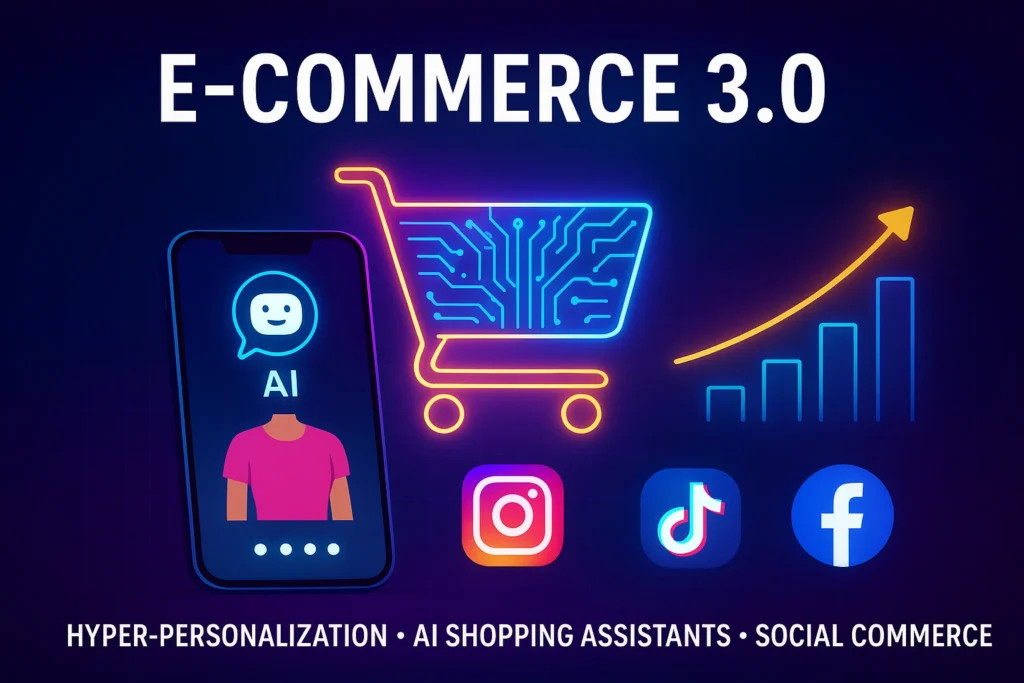
The world of online shopping is evolving at lightning speed. We’ve moved from simple product catalogs (E-commerce 1.0) to mobile-first shopping and omnichannel experiences (E-commerce 2.0). Now, we are entering E-commerce 3.0, a new era where AI-driven personalization, virtual shopping assistants, and social commerce are transforming the way consumers shop and businesses sell.
This next phase of e-commerce is all about intelligence, convenience, and experience. With consumers demanding tailored shopping journeys, businesses must adopt technologies like AI, machine learning, chatbots, AR/VR, and social media integration to stay competitive.
In this blog, we’ll explore the key pillars of E-commerce 3.0, examples of how businesses are leveraging them, and the opportunities for entrepreneurs and established brands alike.
The Evolution of E-commerce
- E-commerce 1.0 (1990s–2000s): Basic online product catalogs, limited payment options, desktop-only browsing.
- E-commerce 2.0 (2010s): Mobile-first, fast deliveries, omnichannel strategies, influencer marketing.
- E-commerce 3.0 (Today & Beyond): AI-powered personalization, immersive experiences, community-driven shopping, and automation.
Key Pillars of E-commerce 3.0
1. Hyper-Personalization in Shopping
Consumers no longer want generic recommendations—they expect tailored experiences.
- AI-Powered Product Suggestions: Retailers like Amazon use AI to predict shopping intent based on browsing and purchase history.
- Dynamic Pricing Models: Personalized discounts based on consumer behavior.
- Customized Emails & Push Notifications: Targeted campaigns that drive higher conversions.
- Benefit: Increases customer loyalty, repeat purchases, and brand trust.
2. AI Shopping Assistants & Chatbots
Virtual assistants are transforming how people interact with online stores.
- Examples:
- Sephora’s chatbot recommends products based on skin type and preferences.
- H&M’s AI stylist suggests outfits to customers.
- Features of AI Shopping Assistants:
- Answer customer queries instantly.
- Provide personalized recommendations.
- Assist with payments and checkout.
- Reduce cart abandonment.
- Benefit: 24/7 customer support, reduced costs, and improved customer experience.
3. Social Commerce: Shopping Inside Social Media
Social platforms are no longer just for connection—they’re powerful shopping hubs.
- Examples:
- Instagram Shops let brands sell directly inside the app.
- TikTok Shop allows creators to sell products during livestreams.
- Facebook Marketplace connects buyers and sellers instantly.
- Benefits of Social Commerce:
- Reduces friction in the buyer journey.
- Leverages influencers and community trust.
- Increases impulse buying through integrated ads and shopping links.
4. AR/VR Shopping Experiences
Immersive technology is redefining online shopping.
- Examples:
- IKEA’s AR app lets customers preview furniture in their homes.
- Lenskart allows virtual try-ons of eyewear.
- Benefit: Reduces returns, increases customer confidence, and enhances engagement.
5. Voice Commerce & Smart Devices
The rise of Alexa, Google Assistant, and Siri has given way to voice-driven shopping.
- Example: Customers reorder groceries via Alexa with simple voice commands.
- Benefit: Hands-free, convenient, and futuristic shopping experiences.
6. Subscription & Membership Models
E-commerce 3.0 is about relationships, not transactions.
- Examples:
- Amazon Prime for fast delivery and exclusive content.
- Beauty subscription boxes like Birchbox or Sugar Cosmetics.
- Benefit: Recurring revenue, brand loyalty, and deeper customer engagement.
Benefits of E-commerce 3.0 for Businesses
- Higher Conversions: Personalized experiences lead to better sales.
- Improved Retention: AI helps brands build loyalty through consistent relevance.
- Global Reach: Social commerce and mobile-first strategies expand audiences.
- Operational Efficiency: Automation reduces human error and support costs.
- Competitive Edge: Businesses adopting these innovations gain market leadership.
Challenges of E-commerce 3.0
- Data Privacy Concerns: Customers demand transparency in how their data is used.
- Technology Costs: Implementing AI and AR can be expensive.
- Cybersecurity Risks: More personalization means more sensitive data to protect.
- Platform Dependency: Over-reliance on social platforms can be risky.
Future Trends in E-commerce
- Metaverse Shopping Experiences – fully virtual malls and showrooms.
- AI-Generated Influencers – brands collaborating with digital humans.
- Blockchain Payments & NFTs – secure, decentralized transactions.
- Sustainable Commerce – eco-friendly products and green packaging as consumer priorities.
Conclusion
E-commerce 3.0 is more than just online shopping—it’s a revolution in customer experience. By embracing hyper-personalization, AI shopping assistants, and social commerce, businesses can build stronger connections, drive higher sales, and future-proof their brand.
For entrepreneurs and established companies alike, the key to success in this new era is innovation, customer trust, and adaptability.
Disclaimer
This blog is for educational purposes only. It does not provide financial, legal, or investment advice. Readers should conduct independent research or consult professionals before making business decisions.
FAQ’s
1. What is E-commerce 3.0?
E-commerce 3.0 refers to the next phase of online shopping powered by AI, personalization, AR/VR, and social commerce.
2. How does hyper-personalization benefit businesses?
It increases conversions, improves retention, and builds stronger brand loyalty by offering customized experiences.
3. What are AI shopping assistants?
They are virtual assistants or chatbots that help customers with product suggestions, queries, and checkout support.
4. What is social commerce?
Social commerce is the buying and selling of products directly through social media platforms like Instagram, TikTok, and Facebook.
5. How does AR/VR improve online shopping?
It allows customers to virtually try products before buying, reducing returns and enhancing confidence.
6. Is voice commerce part of E-commerce 3.0?
Yes, voice-enabled shopping via devices like Alexa and Google Assistant is a growing trend in this phase.
7. What challenges do businesses face with E-commerce 3.0?
Data privacy, tech implementation costs, cybersecurity threats, and dependence on third-party platforms.
Internal Link :-
- Best Home Workouts Without Equipment: Build Strength Anytime, Anywhere
- 7-Day Healthy Meal Plan for Beginners: Simple & Delicious Recipes
- Sugs Lloyd IPO 2025 – Dates, Price Band, GMP, Allotment & Review
- Snehaa Organics IPO 2025 – Price Band, GMP, Subscription, Allotment & Detailed Review
- Goel Construction Company Ltd IPO: GMP, Price Band, Allotment, and Listing Details

Thanks for sharing. I read many of your blog posts, cool, your blog is very good. https://www.binance.com/register?ref=IHJUI7TF
Your article helped me a lot, is there any more related content? Thanks! https://accounts.binance.info/kz/register?ref=K8NFKJBQ