Discover how digital voting and blockchain technology are transforming future elections with enhanced security, transparency, and voter trust.
Introduction
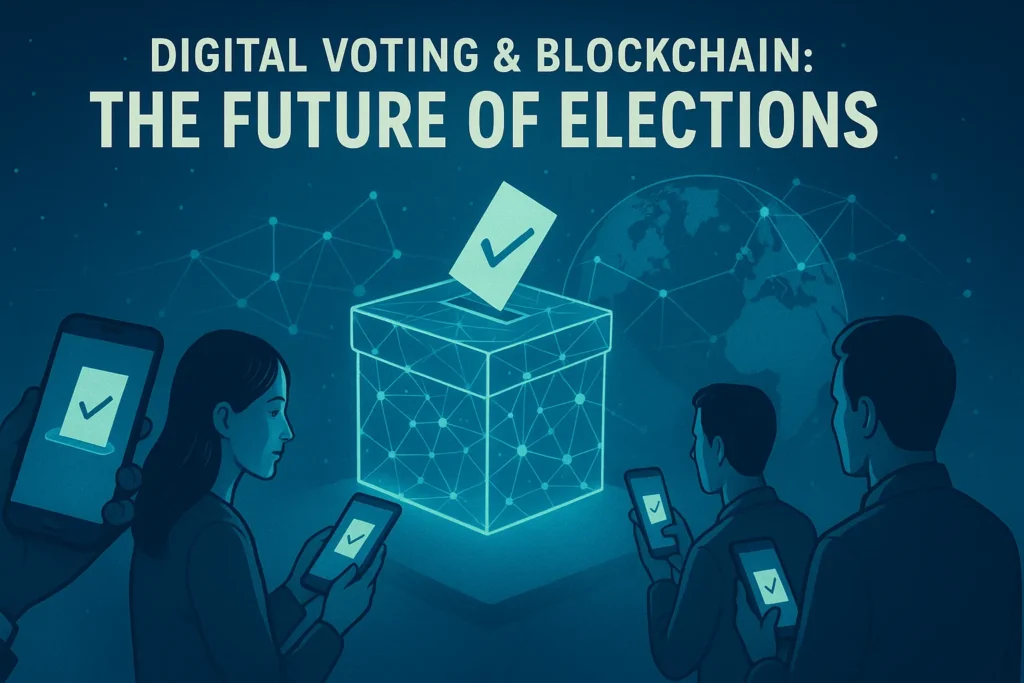
The foundation of any democracy lies in free, fair, and transparent elections. However, traditional voting systems often face challenges such as fraud, low turnout, logistical inefficiencies, and mistrust. With rapid technological advancements, digital voting and blockchain are emerging as powerful solutions to modernize electoral processes worldwide.
Imagine a world where you could securely vote from your smartphone, where each ballot is tamper-proof, verifiable, and transparent thanks to blockchain. This isn’t just a futuristic idea—it is already being tested and could redefine how democracies function in the coming decades.
The Evolution of Voting Systems
From Paper Ballots to E-Voting
- Paper ballots have long been the standard but come with risks of tampering, miscounts, and logistical delays.
- Electronic voting machines (EVMs) reduced human error but raised questions about hacking and transparency.
Why Digital Voting Is the Next Step
- Convenience: Citizens can vote from anywhere, boosting turnout.
- Cost Reduction: Eliminates printing, storage, and transportation of paper ballots.
- Faster Results: Digital systems allow instant vote tallying.
Blockchain: The Backbone of Secure Digital Voting
What Is Blockchain Voting?
Blockchain is a decentralized, tamper-proof ledger system. In elections, each vote is recorded as a unique, encrypted transaction that cannot be altered once registered.
Key Features of Blockchain in Elections
- Transparency: Anyone can verify results without compromising voter privacy.
- Security: Distributed nodes make hacking nearly impossible.
- Immutability: Votes, once cast, cannot be changed or deleted.
- Anonymity + Accountability: Voter identity remains private, but votes are verifiable.
How Digital Voting with Blockchain Works
- Voter Authentication: Biometric or digital ID ensures only eligible voters participate.
- Vote Casting: Citizens vote via a secure app or online portal.
- Blockchain Recording: Each vote is encrypted and added to a blockchain ledger.
- Verification: Voters can verify that their vote was counted without revealing their choice.
- Result Compilation: Results are instantly available, eliminating manual counting delays.
Real-World Examples of Blockchain Voting
- Estonia: A global leader in digital democracy, Estonia allows secure online voting in national elections.
- West Virginia, USA: Tested blockchain-based voting for military personnel overseas in 2018.
- Sierra Leone: Conducted a blockchain pilot project to ensure election transparency.
- India: Exploring blockchain voting for migrant workers to increase participation.
These case studies show that blockchain voting is not just theoretical—it’s already being tested on the ground.
Benefits of Digital Voting & Blockchain in Elections
1. Enhanced Voter Participation
Digital voting eliminates barriers like distance, disability, or time, ensuring higher voter turnout.
2. Stronger Election Security
Blockchain prevents tampering, double voting, or unauthorized access.
3. Cost-Effective & Efficient
Reduces expenses related to ballot printing, polling staff, and logistics.
4. Faster & More Accurate Results
Instant vote tallying removes the need for manual counting, reducing errors.
5. Increased Transparency & Trust
Voters can track their ballots, building confidence in the electoral process.
Challenges & Risks of Blockchain Voting
Digital Divide
Not all citizens have access to the internet or smartphones, risking voter exclusion.
Cybersecurity Threats
Although blockchain is secure, digital systems still face risks like phishing attacks or malware.
Privacy Concerns
Maintaining anonymity while ensuring verifiability remains a challenge.
Regulatory & Legal Hurdles
Many countries lack legal frameworks to support digital and blockchain voting.
The Future of Elections with Digital Voting & Blockchain
- AI + Blockchain Integration: AI can detect fraud patterns while blockchain secures votes.
- Biometric Authentication: Fingerprints, facial recognition, or iris scans for voter validation.
- Global Blockchain-Based Voting Systems: Potential for citizens abroad to vote seamlessly.
- Smart Contracts in Voting: Automatic rule enforcement, reducing human intervention.
Future elections will likely combine digital convenience with blockchain security, reshaping global democracy.
Conclusion
Digital voting and blockchain are set to redefine the future of democracy. While challenges such as accessibility, privacy, and regulation remain, the benefits of security, transparency, and participation are undeniable. Countries adopting these technologies will lead the way in creating faster, fairer, and more inclusive elections.
The digital revolution is here—and elections are next.
Disclaimer
This blog is for educational purposes only. It does not promote or endorse any political system, election authority, or specific technology provider.
FAQ’s
1. What is digital voting?
Digital voting allows citizens to cast their ballots online through secure platforms, eliminating the need for physical polling stations.
2. How does blockchain improve elections?
Blockchain ensures transparency, security, and immutability, making it nearly impossible to tamper with votes.
3. Which countries are using blockchain voting?
Estonia, the U.S. (West Virginia), Sierra Leone, and India have tested or implemented blockchain-based voting systems.
4. What are the advantages of blockchain voting?
It improves security, boosts voter turnout, reduces costs, and delivers faster results.
5. What challenges does blockchain voting face?
Key challenges include cybersecurity risks, internet accessibility, privacy issues, and lack of legal frameworks.
6. Can blockchain voting prevent election fraud?
Yes, blockchain makes vote tampering and double voting extremely difficult, significantly reducing fraud risks.
7. What is the future of digital voting?
The future involves AI integration, biometric verification, smart contracts, and global adoption for remote voters.
Internal Link :-
- Best Home Workouts Without Equipment: Build Strength Anytime, Anywhere
- 7-Day Healthy Meal Plan for Beginners: Simple & Delicious Recipes
- 10 Best Apps to Save Money in 2025: Smart Budgeting & Financial Freedom
- How to Start Investing with Just $100 in 2025
- Best Side Hustles for Beginners to Make $500/Month in 2025

Can you be more specific about the content of your article? After reading it, I still have some doubts. Hope you can help me. https://www.binance.info/sl/register?ref=GQ1JXNRE
I don’t think the title of your article matches the content lol. Just kidding, mainly because I had some doubts after reading the article.
Reading your article helped me a lot and I agree with you. But I still have some doubts, can you clarify for me? I’ll keep an eye out for your answers. https://www.binance.com/bn/register?ref=WTOZ531Y