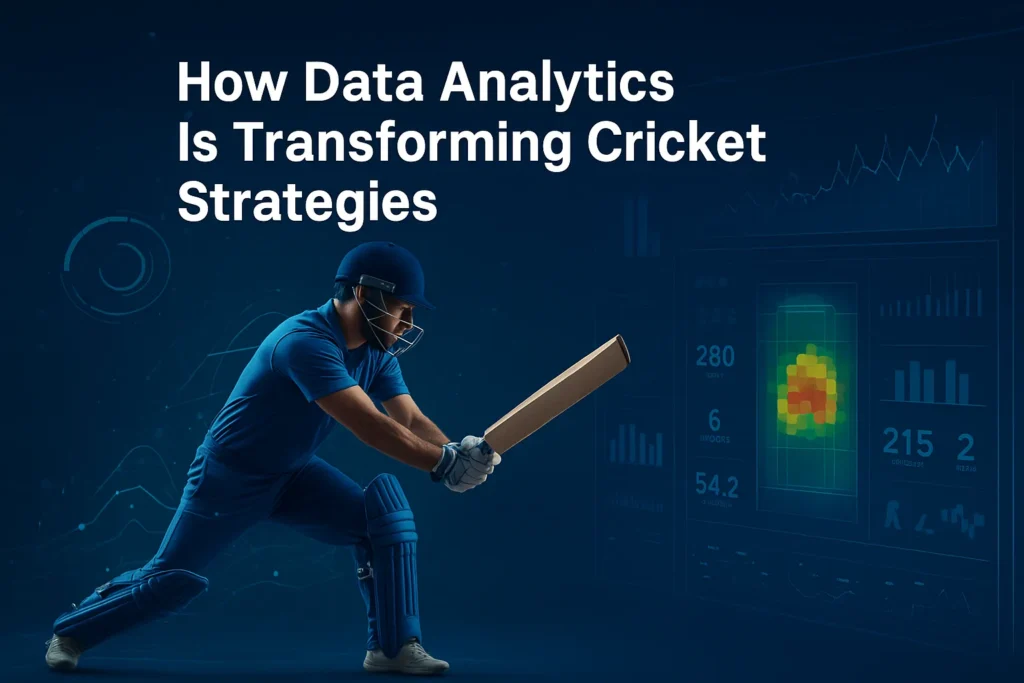
Explore how data analytics is reshaping cricket — from player performance to match strategies and predictive insights. Discover real-world examples, tools, and benefits that are redefining the gentleman’s game.
Introduction
Cricket has always been a game of skill, intuition, and strategy. But in the modern era, one more element has entered the field — data analytics. From predicting player performance to optimizing field placements and even guiding selection decisions, data-driven insights are changing how cricket is played, coached, and managed.
What was once a sport reliant on instinct and experience is now powered by algorithms, big data, and predictive models. Whether it’s the Indian Premier League (IPL) franchises analyzing player stats or international teams studying opposition weaknesses, data analytics has become the new game-changer.
The Evolution of Data Analytics in Cricket
From Gut Feeling to Data-Driven Decisions
In the past, coaches and captains made strategic calls based primarily on experience or “gut feeling.” Today, those same decisions are supported by millions of data points — including ball-by-ball statistics, pitch conditions, player fatigue levels, and even crowd sentiment.
Example:
When the England cricket team won the 2019 ICC World Cup, analysts credited part of their success to the use of performance analytics tools like CricViz and SAP Sports One, which helped in opponent analysis and player optimization.
Rise of the Analyst’s Role
Every modern cricket team now includes a data analytics department. Analysts work alongside coaches to interpret complex data patterns and translate them into actionable strategies — such as when to bowl a particular bowler, how to set field placements, or which batter to promote in the lineup.
Key Areas Where Data Analytics Is Changing Cricket
1. Player Performance Analysis
Data analytics allows teams to break down every aspect of a player’s performance — from batting strike rates under pressure to bowling success on different pitches.
Example:
Virat Kohli’s chase records have been studied in detail using match data, helping India design chase strategies based on his performance metrics. Similarly, bowlers like Jasprit Bumrah use data on opposing batters’ weaknesses to refine their yorkers and bouncers.
Benefits:
- Identify player strengths and weaknesses
- Create customized training programs
- Enhance player selection for specific match conditions
2. Opposition Analysis
Analyzing opponent data helps teams predict likely batting or bowling patterns. Data analysts use heat maps, wagon wheels, and shot charts to understand how opposing batters perform against certain bowlers or in specific areas of the field.
Example:
Australia’s analytics team used data to identify Ben Stokes’s favored scoring zones during the Ashes, allowing bowlers to adjust their line and length accordingly.
Benefits:
- Improved match preparation
- Data-backed field placements
- Counter-strategies for star players
3. Predictive Modeling and Match Forecasting
Machine learning algorithms can simulate possible match outcomes by analyzing conditions like pitch type, weather, team combinations, and recent form. These models help coaches make evidence-based decisions before and during matches.
Example:
The IPL franchises use predictive models to calculate win probabilities in real time, influencing captaincy decisions such as bowling changes or batting orders.
Benefits:
- Real-time decision support
- Enhanced match awareness
- Optimized tactical calls
4. Injury Prevention and Player Fitness
Modern cricket analytics extend beyond match performance. Using wearable tech and biomechanical data, analysts can monitor a player’s workload, fatigue, and injury risk.
Example:
Teams like India and Australia use GPS tracking and motion sensors during training sessions to monitor sprint speeds, workload, and bowling actions. This helps physiotherapists prevent overtraining injuries.
Benefits:
- Improved player longevity
- Reduced injury downtime
- Data-driven fitness management
5. Strategic Team Selection
Gone are the days when team selection relied solely on past records or reputation. Today, AI-driven selection tools evaluate players based on multiple data layers, including form, opposition, pitch type, and venue history.
Example:
The Mumbai Indians in IPL use data tools to determine player matchups, such as selecting bowlers who statistically perform well against particular batters.
Benefits:
- Evidence-based selection
- Balanced squad composition
- Better adaptability to match conditions
6. Fan Engagement and Broadcasting
Analytics isn’t limited to the dressing room — it’s transforming how fans experience cricket. Broadcasters use data visualizations, live statistics, and AI-powered commentary to enhance viewer engagement.
Example:
Platforms like CricViz and ESPN Cricinfo provide real-time insights such as “Win Predictor” and “Smart Stats,” which keep fans informed and entertained.
Benefits:
- Enhanced fan interaction
- Data-rich storytelling in commentary
- Greater audience retention for broadcasters
Case Studies: Data Analytics in Action
Case Study 1: England’s World Cup Triumph (2019)
The England cricket team used advanced data modeling to build a batting lineup capable of aggressive play. The analytics revealed that boundary-hitting frequency correlated strongly with match wins — leading to the “power-hitting” strategy that won them the title.
Case Study 2: IPL Franchise Analytics
Teams like Chennai Super Kings and Kolkata Knight Riders employ analytics to analyze player performance trends and build auction strategies, ensuring each player offers maximum value for money.
Benefits of Data Analytics in Cricket
| Aspect | Traditional Approach | Data-Driven Approach |
|---|---|---|
| Player Selection | Based on intuition | Based on predictive metrics |
| Strategy Planning | Past experience | Algorithmic modeling |
| Opposition Study | Manual observation | Big data analysis |
| Injury Prevention | Basic tracking | Sensor-based fatigue analysis |
| Fan Experience | Commentary-based | Real-time analytics and insights |
Challenges and Ethical Concerns
While data analytics has transformed cricket, it’s not without challenges:
- Data Overload: Too much data can complicate decision-making.
- Bias in Algorithms: Models depend on historical data that may reflect biases.
- Privacy Issues: Wearable devices collect sensitive biometric data.
Cricket authorities must balance innovation with ethics to ensure fair play and transparency.
The Future of Data Analytics in Cricket
By 2030, we can expect even deeper integration of technology in cricket:
- AI-driven strategy assistants analyzing match data live.
- Augmented Reality (AR) overlays for player visualization.
- Emotion analytics detecting player confidence and stress.
- Smart stadiums using data to enhance fan experience.
The next generation of cricket will be not only played on the field — but also won in the data room.
Conclusion
Data analytics has transformed cricket from a game of instincts into a science of precision. Teams can now make informed decisions, optimize performance, and engage fans like never before. As technology continues to evolve, one thing is clear — data is the new cricket coach, quietly guiding every delivery, shot, and strategy behind the scenes.
FAQ’s
1. What is data analytics in cricket?
Data analytics in cricket involves using statistical tools, algorithms, and AI to analyze player performance, match strategies, and opponent data for better decision-making.
2. How does data analytics improve team strategy?
By identifying performance trends, optimal field placements, and player matchups, analytics helps coaches design more effective strategies and increase winning chances.
3. What technologies are used in cricket analytics?
Key technologies include AI, machine learning, wearable sensors, Hawk-Eye, and data visualization software like SAP Sports One and CricViz.
4. Can data analytics prevent injuries in cricket?
Yes, wearable sensors track workload and fatigue levels, allowing medical teams to intervene before injuries occur.
5. How does data analytics benefit fans?
Fans enjoy deeper insights through live statistics, predictive models, and interactive visualizations during matches.
6. Which cricket teams use data analytics the most?
Teams like England, India, and Australia, as well as IPL franchises such as Mumbai Indians and Chennai Super Kings, heavily rely on analytics.
7. What is the future of data analytics in cricket?
Future innovations may include AI-driven decision engines, real-time emotional tracking, and AR-based training simulations.
Disclaimer
This article is intended for educational and informational purposes only. It does not represent any official cricket board, league, or organization. The examples used are for explanatory purposes and do not imply endorsement or official association.

Thank you for your sharing. I am worried that I lack creative ideas. It is your article that makes me full of hope. Thank you. But, I have a question, can you help me?