New to fitness? Learn how to start strength training at home without fancy equipment. Discover simple workouts, benefits, and tips to build strength effectively.
Introduction
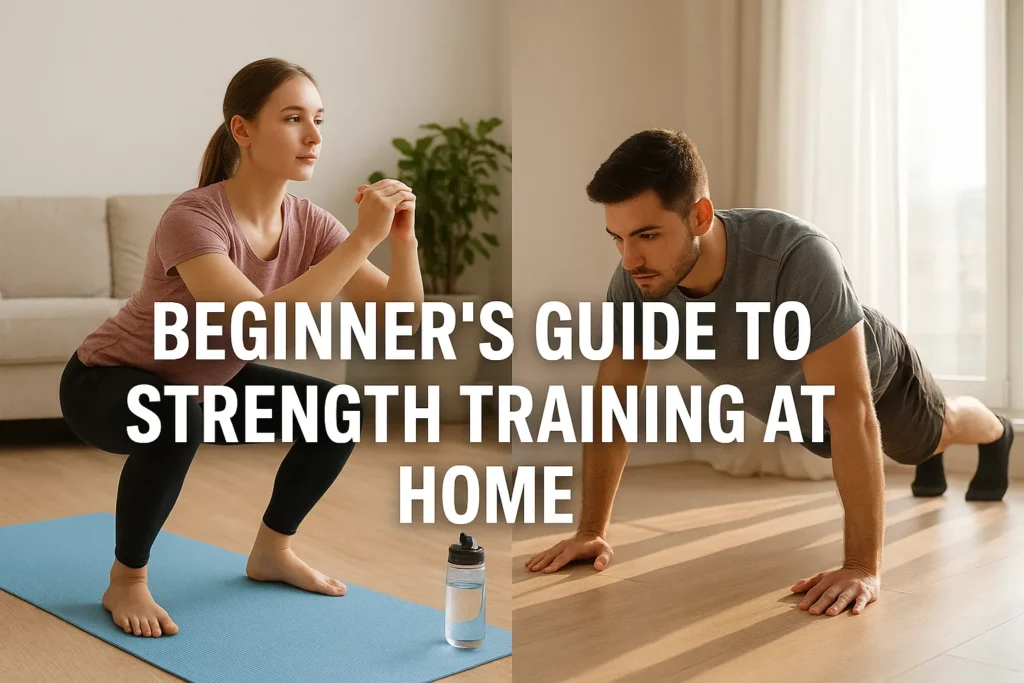
Strength training is one of the most effective ways to improve fitness, build muscle, and boost overall health. But here’s the good news: you don’t need an expensive gym membership or heavy equipment to get started. In 2025, home workouts are more accessible than ever, thanks to bodyweight exercises, resistance bands, and smart training apps.
This beginner’s guide to strength training at home will help you understand the basics, create a routine, and start building strength safely and effectively.
What is Strength Training?
Strength training involves exercises that improve your muscles’ ability to generate force. It can be done with weights, resistance bands, or even your own bodyweight.
Why Strength Training Matters for Beginners
- Increases muscle strength and endurance
- Improves bone health and posture
- Boosts metabolism for fat loss
- Enhances confidence and mental well-being
Essential Equipment for Home Strength Training (Optional)
While bodyweight is enough to start, a few low-cost tools can boost your training:
- Resistance bands – portable and versatile
- Dumbbells or kettlebells – for added resistance
- Pull-up bar – great for back and arm strength
- Yoga mat – for comfort and stability
Strength Training at Home Without Equipment
Beginner-Friendly Bodyweight Exercises
1. Push-Ups
- Muscles worked: Chest, shoulders, triceps
- Modification: Start on your knees if full push-ups are difficult
2. Squats
- Muscles worked: Quads, hamstrings, glutes
- Tip: Keep your back straight and knees aligned
3. Plank
- Muscles worked: Core and shoulders
- Start with 20–30 seconds and gradually increase
4. Glute Bridges
- Muscles worked: Glutes, hamstrings, lower back
- Great for posture and hip strength
5. Lunges
- Muscles worked: Legs and glutes
- Step forward, lower slowly, then return
Creating a Beginner’s Strength Training Routine at Home
Sample 3-Day Beginner Routine (No Equipment Needed)
Day 1 – Upper Body
- Push-ups: 3 sets × 8–10 reps
- Incline push-ups (hands on chair): 3 × 10 reps
- Plank: 3 × 20–30 sec
Day 2 – Lower Body
- Squats: 3 × 12 reps
- Glute bridges: 3 × 15 reps
- Lunges: 3 × 10 reps per leg
Day 3 – Full Body & Core
- Jumping jacks (warm-up): 2 mins
- Squat + shoulder tap push-ups combo: 3 × 10 reps
- Side plank: 2 × 20 sec per side
Tip: Take at least 1 rest day between workout sessions.
Benefits of Strength Training at Home
Physical Benefits
- Builds lean muscle mass
- Enhances joint strength and stability
- Aids in weight management
Mental Benefits
- Reduces stress and anxiety
- Boosts confidence
- Improves focus and discipline
Practical Benefits
- No gym required – saves money and time
- Flexible schedule – train anytime at home
- Beginner-friendly – start with small steps
Common Mistakes Beginners Should Avoid
- Skipping warm-up and cool-down
- Doing too much too soon (risk of injury)
- Incorrect form during exercises
- Not tracking progress
- Ignoring rest and recovery
Tips for Staying Consistent
- Set small, achievable goals (e.g., 3 workouts per week)
- Track progress in a journal or app
- Start with short sessions (15–20 minutes)
- Celebrate milestones (completing a week, increasing reps)
Conclusion
Starting strength training at home doesn’t require a gym, heavy equipment, or hours of time. With just bodyweight exercises, a simple routine, and consistency, beginners can build strength, improve health, and feel more energetic.
Remember: progress is gradual—focus on form, stay consistent, and enjoy the journey to a stronger you.
FAQ’s
1. Can I build muscle with strength training at home?
Yes, beginners can build muscle using bodyweight exercises like squats, push-ups, and planks. Over time, adding resistance bands or dumbbells will enhance results.
2. How many days a week should beginners do strength training?
2–3 non-consecutive days per week is ideal for beginners. This allows your muscles time to recover.
3. Do I need equipment for strength training at home?
No, bodyweight exercises are enough to start. However, resistance bands or dumbbells can help you progress faster.
4. How long does it take to see results?
With consistency, most beginners notice improvements in strength, posture, and energy within 4–6 weeks. Visible muscle growth may take longer.
5. Can strength training help with weight loss?
Yes, strength training boosts metabolism, burns calories, and helps preserve muscle mass during fat loss.
6. Is strength training safe for beginners at home?
Yes, if done with proper form and gradual progression. Always warm up and avoid overtraining.
7. What’s the best time to do strength training at home?
The best time is when you feel most energetic—morning or evening. Consistency matters more than timing.
Disclaimer
This blog is for educational purposes only. Always consult a certified fitness trainer or healthcare professional before starting any new exercise program, especially if you have medical conditions or injuries.
Internal Link :-
- Best Home Workouts Without Equipment: Build Strength Anytime, Anywhere
- 7-Day Healthy Meal Plan for Beginners: Simple & Delicious Recipes
- Sleep Smarter: The Best Time to Go to Bed at Every Stage of Life
- Top 10 Supplements for Energy and Focus: Boost Productivity Naturally
- Goel Construction Company Ltd IPO: GMP, Price Band, Allotment, and Listing Details



I don’t think the title of your article matches the content lol. Just kidding, mainly because I had some doubts after reading the article. https://www.binance.com/register?ref=IHJUI7TF
I don’t think the title of your article matches the content lol. Just kidding, mainly because I had some doubts after reading the article. https://accounts.binance.info/de-CH/register?ref=W0BCQMF1
Your point of view caught my eye and was very interesting. Thanks. I have a question for you.
I don’t think the title of your article matches the content lol. Just kidding, mainly because I had some doubts after reading the article.