Explore the ongoing debate between AI and human creativity. Delve into the unique strengths of both, and understand how they shape the future of creativity in art, design, and innovation.
Introduction
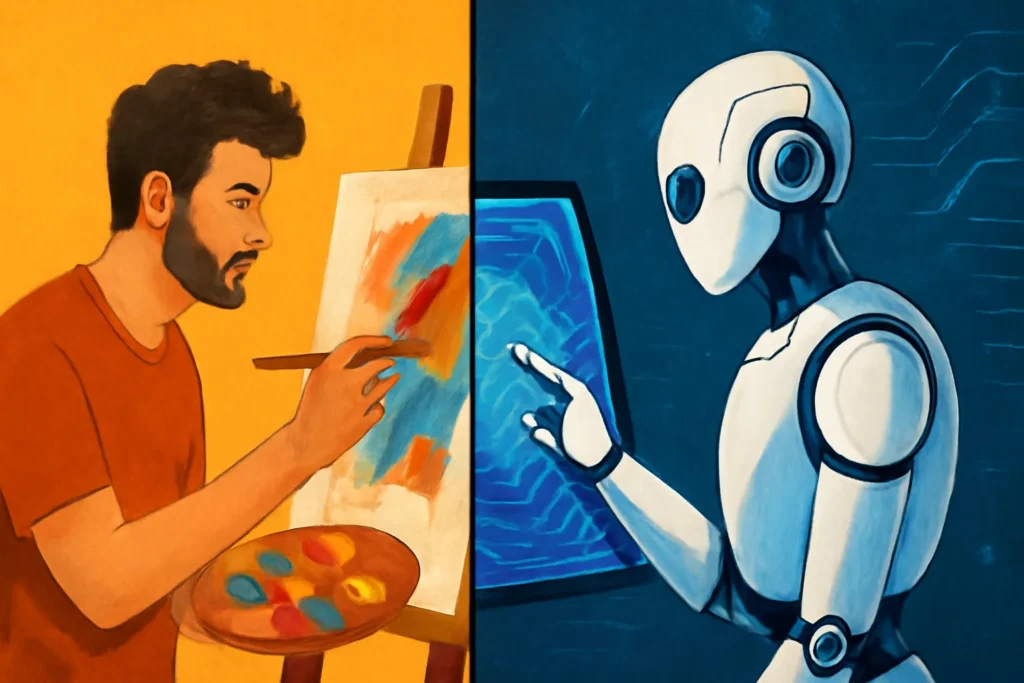
In a world driven by technology, Artificial Intelligence (AI) is transforming the landscape of creativity. From generating artwork to writing blogs, AI is becoming an essential tool for many creative industries. However, despite its rapid advancements, one question remains: Can AI truly replace human creativity? Or is there something uniquely powerful about the human mind that AI cannot replicate?
This blog will dive into the intriguing debate of AI versus human creativity. We’ll compare the strengths, weaknesses, and potential of both, and explore how they complement each other in shaping the future of creative fields.
What is Creativity?
Before we delve into AI and human creativity, it’s essential to understand what creativity is. At its core, creativity involves the ability to produce something original and valuable, whether it’s an idea, a solution, a piece of art, or even a new product.
Human Creativity
Human creativity is deeply tied to emotions, experiences, and intuition. Our ability to think outside the box, connect seemingly unrelated ideas, and craft narratives makes our creative output rich and profound. Human creativity also thrives on flaws, imperfections, and the unique perspectives that come from lived experiences.
AI Creativity
AI, on the other hand, is programmed to learn from vast datasets and patterns. It can replicate artistic styles, create music, or write articles based on pre-learned algorithms and models. While AI can produce impressive results, it lacks the human touch—the personal emotions, struggles, and creativity that comes from lived experiences.
AI in Creative Fields
Art and Design
AI tools like DeepArt and DALL-E have proven capable of generating incredible artwork by analyzing millions of existing pieces. These AI systems can mimic the styles of famous artists or create entirely new designs based on specific inputs.
However, AI lacks the ability to generate truly novel artistic ideas. While it can remix existing styles and patterns, it doesn’t have the ability to innovate in the same way that a human artist can, driven by emotion, personal experience, and intuition.
Example: An AI can create a painting in the style of Van Gogh, but it will never experience the emotional intensity that Van Gogh felt while creating his pieces.
Writing and Content Creation
AI writing tools like GPT-4 are revolutionizing content creation. They can write articles, generate social media posts, and even craft poetry. While these tools are becoming increasingly sophisticated, they still lack the depth and soul that human writers bring to the table. Human writers use their emotions, context, and personal perspectives to add nuance and originality to their content.
Example: A blog written by an AI might be grammatically correct, but it might lack the storytelling aspect and emotional connection that a human writer can provide.
Human Creativity in the Digital Age
Human creativity continues to thrive despite the rise of AI. While AI can assist and enhance creative endeavors, it cannot replace the human ability to think critically, innovate, and express emotions in ways that AI cannot.
Critical Thinking and Innovation
Humans possess a unique ability to think critically and outside the box. We can come up with groundbreaking ideas, question established norms, and create something entirely new. This capacity for innovation is what has driven humanity to make significant advancements in technology, art, and culture.
Example: The invention of the light bulb wasn’t just about engineering; it was about seeing a new possibility that no one else had thought of before.
Emotional Depth and Expression
Creativity is often fueled by human emotions—love, joy, pain, sorrow. These emotions influence how we create and the stories we tell. AI, no matter how advanced, cannot experience emotions in the way humans do. It can mimic the expression of emotion in art or writing, but it cannot truly feel.
Example: A novel written by a human author can evoke deep emotional responses from readers, while an AI-generated novel might be technically correct but lack the emotional depth that resonates with readers.
The Strengths and Limitations of AI Creativity
Strengths of AI Creativity
- Speed and Efficiency: AI can produce creative work much faster than humans. Whether it’s generating a design or writing an article, AI can deliver results in a fraction of the time it would take a human.
- Consistency: AI can maintain high levels of consistency in creative outputs, without the fluctuations of mood, energy, or inspiration that human creators experience.
- Data-Driven: AI can analyze vast amounts of data to predict trends, consumer preferences, and even optimize creative processes. This can be invaluable in industries like marketing and product design.
Limitations of AI Creativity
- Lack of Emotional Intelligence: AI cannot understand or express emotions in the same way humans can, limiting its ability to create truly impactful art.
- Dependence on Data: AI can only create based on the data it has been trained on. It cannot generate entirely new ideas without prior information.
- Impersonal Output: AI-generated content lacks the personal touch and the unique perspective that human creators bring to their work.
The Future of AI and Human Creativity
Rather than seeing AI as a replacement for human creativity, the future likely lies in collaboration. AI can enhance and streamline creative processes, allowing human creators to focus on the bigger picture while AI handles the more repetitive or technical tasks.
Example: Graphic designers can use AI to generate design mockups, which they can then refine and personalize based on their artistic vision.
Conclusion
The debate between AI and human creativity is complex. While AI is an incredible tool for augmenting creativity, it cannot replace the depth, intuition, and emotional connection that human creativity brings to the table. Both have their strengths, and the most successful creative endeavors in the future will likely involve a collaboration between humans and AI, each complementing the other’s strengths.
FAQ Section
1. Can AI replace human creativity in the future?
AI can enhance creativity but is unlikely to replace human creativity entirely due to the emotional depth and critical thinking that humans bring to the table.
2. What are the benefits of using AI in creative fields?
AI can improve efficiency, consistency, and data-driven decision-making, helping creative professionals save time and optimize their work.
3. Is AI capable of creating original art?
AI can generate art based on learned styles and patterns but is not truly original. It cannot innovate in the same way humans do.
4. How can AI assist human writers?
AI can help writers with tasks like grammar checking, generating content ideas, and improving writing speed, but it cannot replace the emotional and storytelling aspects of writing.
5. Can AI be used to design products?
Yes, AI can analyze data to predict trends and help designers create products that resonate with consumers, but human designers add creativity and innovation to the process.
6. What is the role of emotional intelligence in creativity?
Emotional intelligence allows humans to connect deeply with their audience through creative work, an element AI cannot replicate.
7. Will AI ever be as creative as humans?
While AI can mimic creativity, it cannot replicate the full scope of human creativity, particularly when it comes to emotional depth and original innovation.
Disclaimer:
This article is intended for educational purposes only. The content is based on current technologies and trends and does not predict future advancements in AI and creativity.
Internal Link :-
- GPT-5 and Apple Intelligence Power iPhone 17 as Apple Declares Older iPhones Vintage
- Best AI Tools for Students in 2025: Boost Productivity, Learning & Creativity
- ChatGPT Alternatives You Should Try in 2025
- Top 10 Gadgets Under $100 That Make Everyday Life Easier
- How to Use AI to Save Time at Work: Smart Tools & Strategies


I don’t think the title of your article matches the content lol. Just kidding, mainly because I had some doubts after reading the article.