Discover how AI in governance is shaping political decision-making, enhancing transparency, improving efficiency, and building smarter governments for the future.

Introduction
Governance has always relied on data, insights, and human judgment to create effective policies. However, the scale and complexity of modern societies make decision-making more challenging than ever. Enter Artificial Intelligence (AI) — a game-changer in political governance. From analyzing citizen feedback to predicting economic outcomes, AI is helping governments make smarter, faster, and more transparent decisions.
This blog explores how AI is shaping political decision-making, its benefits, real-world applications, challenges, and future possibilities.
The Rise of AI in Governance
Governments worldwide are turning to AI to modernize administrative processes. The growing reliance on big data, automation, and predictive models is pushing political leaders to embrace AI for more efficient and accurate governance.
Why Now?
- Explosion of big data from social media, surveys, and sensors
- Growing demand for transparency and accountability
- Rapid technological advancements in machine learning & natural language processing
Key Areas Where AI is Transforming Governance
1. Policy Formulation and Data Analysis
AI helps governments analyze massive datasets to design better policies.
- Example: In India, AI is used to analyze agricultural data to inform farmer-friendly policies.
- Benefit: Data-driven policies reduce guesswork and increase efficiency.
2. Predictive Governance
Predictive models help foresee crises before they occur.
- Example: Predictive AI in the U.S. identifies regions prone to wildfires and floods.
- Benefit: Proactive measures save lives and reduce costs.
3. Enhancing Citizen Engagement
AI chatbots and digital assistants provide real-time responses to citizen queries.
- Example: Estonia’s e-Governance uses AI-driven systems for seamless citizen services.
- Benefit: Faster service delivery builds public trust.
4. Combating Corruption & Increasing Transparency
AI can detect anomalies in financial transactions and procurement processes.
- Example: South Korea uses AI-powered auditing tools to spot fraudulent government spending.
- Benefit: Minimizes corruption and strengthens accountability.
5. Smart Law Enforcement & Security
AI assists in crime prediction, surveillance, and maintaining law & order.
- Example: Predictive policing in the UK helps allocate police resources more effectively.
- Benefit: Safer communities with optimized law enforcement.
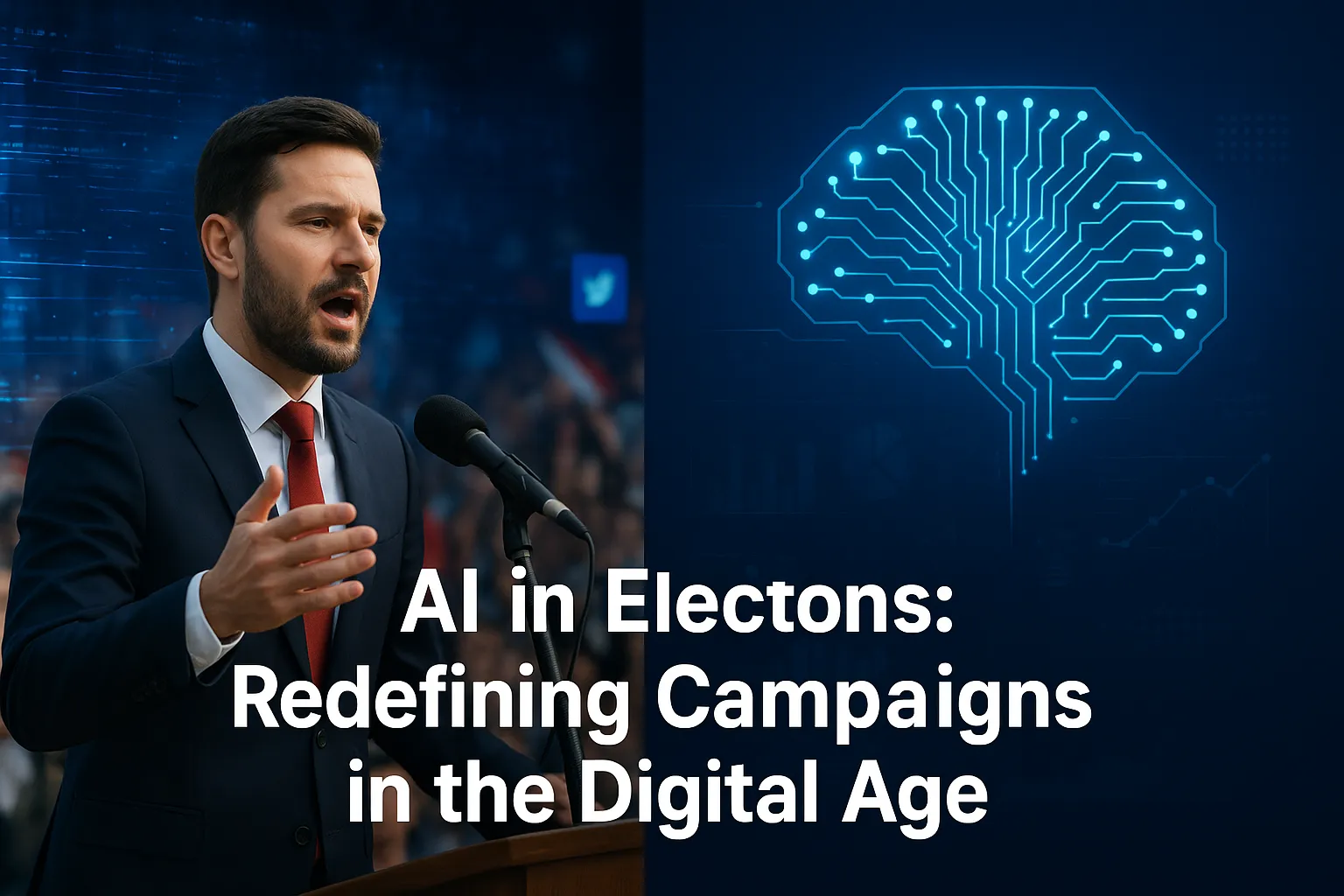
6. Election Monitoring & Voter Insights
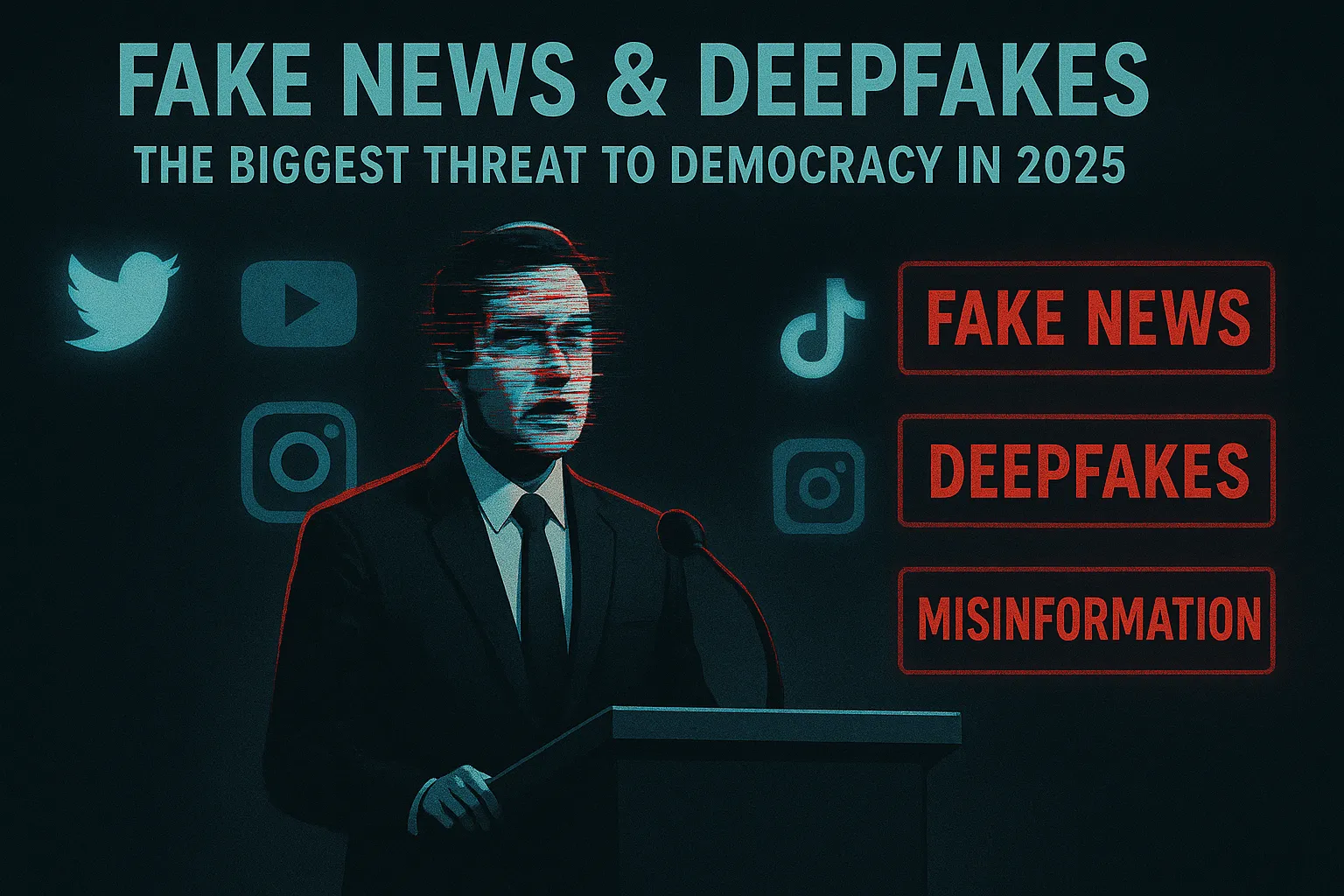
AI tools analyze voter sentiment and detect misinformation campaigns.
- Example: AI was deployed in the 2020 U.S. elections to identify fake news and bots.
- Benefit: Ensures fairer and more transparent elections.
Benefits of AI in Political Decision-Making
- Speed: Faster decision-making compared to manual analysis.
- Accuracy: AI eliminates human bias (to an extent).
- Efficiency: Automates routine governance tasks.
- Cost Savings: Optimized use of resources reduces wastage.
- Inclusivity: AI-driven platforms give citizens a stronger voice.
Challenges & Ethical Concerns
While AI offers numerous benefits, its application in governance raises serious questions.
Bias in AI Algorithms
If training data is biased, AI outputs can reinforce discrimination.
Privacy Concerns
AI systems require massive data, which may threaten citizen privacy.
Job Displacement
Automation in governance may reduce employment opportunities in the public sector.
Dependence on Technology
Over-reliance on AI may undermine human judgment in political decisions.
The Future of AI in Governance
The future holds exciting possibilities:
- AI-powered e-parliaments where decisions are informed by real-time data.
- Blockchain + AI for tamper-proof, transparent governance.
- Digital twins of cities for testing urban policies before implementation.
- AI ethics frameworks to ensure responsible use.
Governments that balance AI innovation with ethics and inclusivity will lead the future of political governance.
Conclusion
Artificial Intelligence is no longer a futuristic concept — it is already shaping governance worldwide. From policy formulation to citizen engagement, AI is revolutionizing the way governments operate. While challenges like bias and privacy remain, the potential for AI-driven governance to create transparent, efficient, and citizen-friendly political systems is immense.
Disclaimer
This article is for educational purposes only and does not promote or endorse any specific political party, policy, or government initiative.
FAQ’s
1. What is AI in governance?
AI in governance refers to the use of artificial intelligence technologies to support political decision-making, improve public services, and increase transparency in government operations.
2. How does AI improve political decision-making?
AI analyzes large datasets, predicts trends, and offers evidence-based insights, helping policymakers make more informed and effective decisions.
3. Can AI prevent corruption in government?
Yes, AI can detect suspicious financial activities, monitor procurement, and highlight anomalies, making corruption harder to conceal.
4. Are there risks of using AI in politics?
Yes, risks include algorithmic bias, privacy issues, job displacement, and over-dependence on technology in critical governance decisions.
5. Which countries are using AI in governance?
Countries like Estonia, South Korea, India, the U.S., and the U.K. are leading in adopting AI for citizen services, predictive governance, and election monitoring.
6. Can AI replace politicians in the future?
No, AI cannot replace politicians entirely. It can provide data-driven insights, but leadership, ethics, and human judgment remain essential in governance.
7. What is the future of AI in governance?
The future includes AI-driven parliaments, blockchain integration, and ethical frameworks ensuring transparent, fair, and citizen-centric governance.
Internal Link :-
- Best Home Workouts Without Equipment: Build Strength Anytime, Anywhere
- 7-Day Healthy Meal Plan for Beginners: Simple & Delicious Recipes
- 10 Best Apps to Save Money in 2025: Smart Budgeting & Financial Freedom
- How to Start Investing with Just $100 in 2025
- Best Side Hustles for Beginners to Make $500/Month in 2025