Discover how Africa’s booming middle class is reshaping global markets. Explore key trends, opportunities, and strategies for businesses to thrive in this emerging economic powerhouse.
Introduction
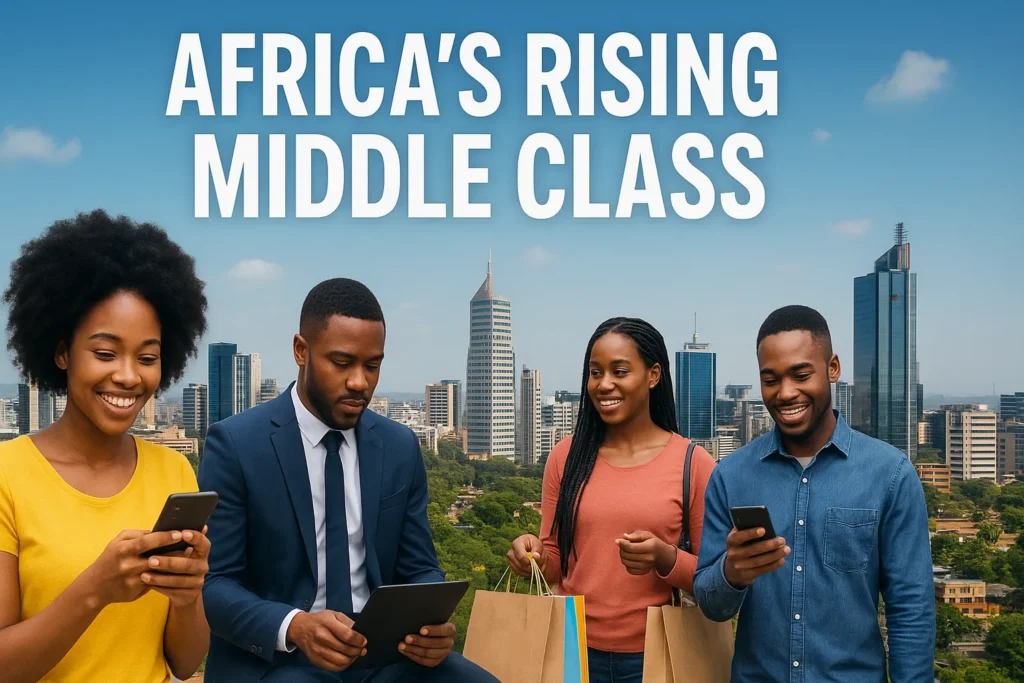
Over the past two decades, Africa has undergone a quiet yet powerful transformation. Once perceived mainly as a continent reliant on aid, Africa is now emerging as a vibrant consumer market fueled by a rapidly expanding middle class. This demographic shift presents one of the biggest global business opportunities of the 21st century — a market filled with youthful energy, increasing purchasing power, and growing demand for quality goods and services.
For companies seeking long-term growth beyond saturated Western markets, Africa’s rising middle class offers an unmatched opportunity for innovation, investment, and expansion.
Understanding Africa’s Middle Class Boom
Who Makes Up Africa’s Middle Class?
According to the African Development Bank (AfDB), Africa’s middle class includes individuals earning between $2 and $20 per day. While this may seem modest by Western standards, it represents a major shift from poverty to stability, enabling millions of Africans to afford better housing, education, healthcare, and consumer goods.
Key Drivers of Growth
- Urbanization: Africa is urbanizing faster than any other region. By 2050, more than 60% of Africans will live in cities, creating concentrated hubs of economic activity.
- Youth Demographics: With over 60% of its population under 25, Africa boasts one of the world’s youngest and most dynamic consumer bases.
- Digital Revolution: Mobile money, e-commerce, and fintech innovation are reshaping how Africans buy, save, and invest.
- Rising Incomes: Increased access to education and entrepreneurship opportunities are pushing millions into middle-income brackets.
A Continent of Opportunity: Why Global Brands Are Paying Attention
1. Consumer Spending Power Is Exploding
Africa’s consumer spending is projected to reach $2.5 trillion by 2030, according to McKinsey. From fashion to food, tech to transportation, middle-class Africans are demanding more choices and better quality.
Example:
- Unilever has expanded operations in Nigeria, Kenya, and South Africa, offering affordable versions of global products to meet local needs.
- Coca-Cola and Nestlé have invested heavily in regional manufacturing to cater to evolving tastes and price points.
2. The Digital Economy: Africa’s New Growth Engine
The rise of mobile technology has leapfrogged traditional infrastructure barriers. Platforms like M-Pesa in Kenya and Flutterwave in Nigeria have revolutionized digital payments, enabling millions to participate in the formal economy.
E-commerce giants such as Jumia and Konga are already capitalizing on this trend, while Amazon and Alibaba are exploring partnerships to gain a foothold in Africa’s online retail space.
3. Infrastructure and Real Estate Boom
With more people entering the middle class, the demand for housing, transportation, and modern infrastructure is skyrocketing.
Cities like Lagos, Nairobi, Accra, and Johannesburg are witnessing rapid development, drawing attention from foreign investors and construction giants.
4. Education and Lifestyle Upgrades
A growing middle class means more emphasis on quality education, healthcare, and lifestyle services.
Global brands in edtech, healthcare, fitness, and entertainment are already finding eager audiences among Africa’s aspirational young professionals.
Regional Hotspots for Investment
1. Nigeria – The Powerhouse of West Africa
With over 200 million people, Nigeria’s expanding urban population and digital-savvy youth make it a magnet for investors, particularly in fintech, fashion, and media.
2. Kenya – East Africa’s Innovation Hub
Known as the “Silicon Savannah,” Kenya is leading the charge in digital transformation with world-renowned startups and strong government support for tech entrepreneurship.
3. South Africa – The Gateway to the Continent
South Africa’s mature financial markets and developed infrastructure make it a preferred entry point for global companies targeting Africa’s growing consumer class.
4. Ghana and Côte d’Ivoire – Rising Stars
These West African nations are experiencing consistent economic growth and political stability, attracting investors in real estate, energy, and consumer goods.
Benefits for Global Companies Entering the African Market
- Untapped Consumer Base: Hundreds of millions of new customers are entering the market.
- Long-Term Growth Potential: Africa’s middle class is still in its infancy, with massive room for expansion.
- Innovation Opportunities: Companies can co-create products tailored to local preferences.
- High Return on Investment: Early entrants stand to gain significant market share and brand loyalty.
Challenges to Navigate
While the potential is enormous, companies must approach Africa with cultural intelligence and local insight.
- Infrastructure gaps can raise operational costs.
- Regulatory complexities differ by country.
- Local partnerships are crucial for navigating market nuances.
Brands that adapt their business models — rather than copy-pasting Western strategies — will see the greatest success.
Conclusion
Africa’s rising middle class represents not just an economic transformation but a societal evolution. Global businesses that recognize this shift early will be the ones shaping the continent’s future markets.
From technology and real estate to education and consumer goods, Africa’s middle class is the beating heart of the continent’s next growth story. For forward-thinking companies, the message is clear: Ignore Africa at your own risk.
FAQ’s
1. Why is Africa’s middle class growing so fast?
Africa’s middle class is expanding due to rapid urbanization, increased access to education, digital innovation, and rising incomes across major cities.
2. Which African countries offer the best opportunities for investors?
Nigeria, Kenya, South Africa, Ghana, and Egypt are among the top destinations for foreign investors seeking access to Africa’s growing middle-class market.
3. What industries benefit most from Africa’s emerging middle class?
Sectors like technology, retail, real estate, healthcare, education, and entertainment are seeing significant growth due to rising consumer demand.
4. How can global brands successfully enter African markets?
By building local partnerships, adapting products to regional tastes, and investing in digital platforms to reach younger consumers.
5. Is Africa ready for large-scale digital transformation?
Yes — with over 500 million smartphone users and widespread fintech adoption, Africa is already leading digital innovation in the Global South.
6. What challenges do foreign investors face in Africa?
Challenges include inconsistent regulations, infrastructure gaps, and the need for deep cultural understanding — but these can be overcome with local collaboration.
7. What is the long-term outlook for Africa’s middle class?
Experts predict Africa’s middle class will double by 2040, driving sustained economic growth and consumer market expansion across the continent.
Disclaimer
This article is for educational and informational purposes only. It does not constitute financial or investment advice. Always conduct thorough market research or consult a qualified expert before making business decisions.
Internal Link :-
- Best Home Workouts Without Equipment: Build Strength Anytime, Anywhere
- 7-Day Healthy Meal Plan for Beginners: Simple & Delicious Recipes
- Sleep Smarter: The Best Time to Go to Bed at Every Stage of Life
- Top 10 Supplements for Energy and Focus: Boost Productivity Naturally
- Goel Construction Company Ltd IPO: GMP, Price Band, Allotment, and Listing Details



Can you be more specific about the content of your article? After reading it, I still have some doubts. Hope you can help me.
Can you be more specific about the content of your article? After reading it, I still have some doubts. Hope you can help me. https://accounts.binance.com/ur/register?ref=SZSSS70P
Your article helped me a lot, is there any more related content? Thanks!
Thank you for your sharing. I am worried that I lack creative ideas. It is your article that makes me full of hope. Thank you. But, I have a question, can you help me? https://accounts.binance.info/si-LK/register-person?ref=LBF8F65G