Explore whether AI doctors can truly replace human physicians. Discover the benefits, limitations, and the future of artificial intelligence in modern healthcare.
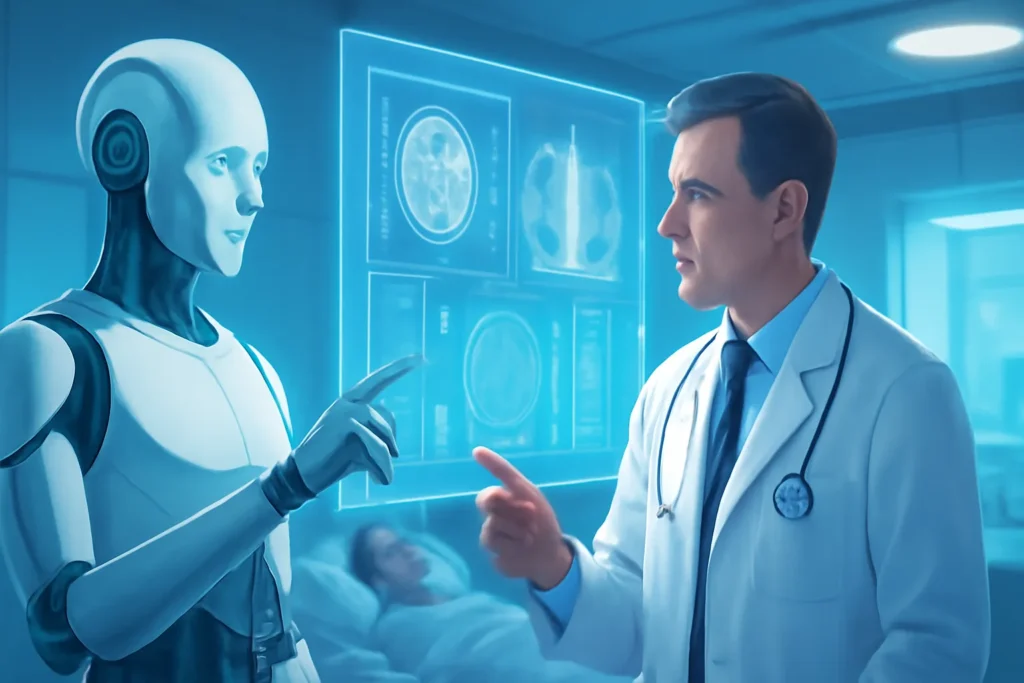
Introduction
Artificial Intelligence (AI) is reshaping nearly every industry, and healthcare is no exception. From diagnosing diseases to predicting patient outcomes, AI doctors and medical algorithms are becoming powerful tools in hospitals and clinics worldwide.
But one pressing question remains: Can AI doctors ever replace human physicians?
While AI shows remarkable accuracy and efficiency, medicine isn’t just about data — it’s about empathy, ethics, and human connection. Let’s explore how far AI has come, its strengths, its limitations, and whether it’s poised to overtake human doctors anytime soon.
The Rise of AI in Healthcare
How AI Doctors Work
AI in medicine uses machine learning algorithms, neural networks, and big data to process vast amounts of patient information. These systems can detect patterns in medical images, analyze lab results, and even recommend treatment plans.
For example:
- IBM Watson Health analyzes medical literature and suggests potential diagnoses.
- Google’s DeepMind can detect eye diseases and cancer with near-human accuracy.
- AI chatbots like Babylon Health or Ada Health assist patients with symptom checking.
Why AI Is Revolutionizing Medicine
- Speed: AI can process millions of medical records in seconds.
- Accuracy: In certain diagnostic fields, AI has outperformed human specialists.
- Accessibility: AI tools can bring medical expertise to remote or underserved regions.
- Cost Efficiency: Automated systems can reduce administrative burdens and lower healthcare costs.
Strengths of AI in Medicine
1. Diagnostic Precision
AI algorithms trained on millions of medical images can identify conditions such as:
- Breast cancer (via mammograms)
- Lung disease (via CT scans)
- Diabetic retinopathy (via retinal scans)
For instance, a 2020 study published in Nature found that Google Health’s AI model outperformed radiologists in breast cancer detection accuracy.
2. Predictive Analytics
AI can predict disease outbreaks, hospital admissions, or even patient relapse by analyzing real-time data.
Example:
In 2023, researchers used AI to forecast COVID-19 surges weeks in advance, helping hospitals prepare for patient influx.
3. Robotic Surgery
Robotic systems like da Vinci Surgical System use AI assistance to enhance precision, reduce human error, and shorten recovery times.
4. Administrative Automation
AI reduces doctor burnout by automating tasks such as:
- Patient data entry
- Insurance claims
- Appointment scheduling
This allows doctors to spend more time on patient care rather than paperwork.
Limitations: Why AI Can’t Fully Replace Human Physicians
1. Lack of Empathy and Human Touch
Medicine is not only science — it’s compassion.
AI may analyze symptoms, but it can’t comfort a grieving family, understand cultural nuances, or build trust through empathy.
2. Ethical and Legal Concerns
Who is responsible if an AI makes a wrong diagnosis?
Without clear accountability frameworks, fully autonomous AI doctors pose serious ethical challenges.
3. Data Bias and Inequality
AI systems learn from existing data — and if that data is biased or incomplete, the outcomes can be unfair or inaccurate.
For example, if datasets underrepresent African or Asian populations, AI might misdiagnose diseases in those groups.
4. Limited Creativity and Intuition
Human physicians often rely on intuition and experience to make complex decisions that algorithms can’t quantify.
AI is bound by programmed parameters — it cannot think outside its coded “box.”
5. Dependency on Infrastructure
AI requires stable electricity, internet, and digital medical records — luxuries that are not available everywhere, especially in developing regions.
Human Doctors + AI: A Powerful Partnership
Rather than replacing physicians, the future of medicine lies in collaboration between AI and human expertise.
How AI Assists Human Doctors
- AI analyzes data; doctors interpret context.
- AI handles repetitive tasks; doctors focus on empathy and judgment.
- AI suggests treatment; doctors personalize care.
Example:
In radiology, AI can highlight suspicious areas on scans, while the doctor confirms the diagnosis. This reduces diagnostic errors and saves time.
Case Study: Mayo Clinic
The Mayo Clinic uses AI to detect heart diseases early by analyzing ECG data. The AI alerts doctors, who then confirm and guide treatment.
This collaboration has improved patient outcomes without replacing the human role.
The Future of AI in Healthcare
AI Will Be a Co-Pilot, Not a Replacement
Just like autopilot helps pilots navigate but doesn’t replace them, AI will assist doctors in delivering faster and more accurate healthcare.
More Personalized Medicine
AI will help create customized treatment plans based on a person’s genetics, lifestyle, and medical history — moving from “one-size-fits-all” to precision healthcare.
Remote Care and Telemedicine
AI-driven telehealth platforms will expand access to healthcare in rural or underserved areas, ensuring patients receive timely attention.
Continuous Learning Systems
AI models will continue to evolve with every patient interaction, improving their diagnostic accuracy over time.
Conclusion
So, can AI doctors replace human physicians?
Not entirely — at least not anytime soon.
While AI excels in speed, data analysis, and accuracy, it lacks the empathy, ethics, and emotional intelligence that define human medicine. The future of healthcare will not be “AI vs. Humans” but rather “AI + Humans” working together to make medicine smarter, faster, and more humane.
In short, AI won’t replace doctors — but doctors who use AI may replace those who don’t.
FAQ’s
1. Can AI doctors really diagnose patients?
Yes, AI systems can analyze symptoms, medical images, and test results to suggest potential diagnoses — often with remarkable accuracy. However, a human doctor must always validate the results.
2. What are the main benefits of AI in healthcare?
AI improves diagnostic speed, accuracy, cost-efficiency, and accessibility, especially in rural or underserved regions.
3. Are AI doctors safe to use?
AI tools are generally safe when used as decision-support systems alongside human oversight. However, full automation without medical supervision can be risky.
4. Will AI doctors replace human physicians completely?
No. AI can assist but not replace human doctors, as it lacks empathy, ethics, and nuanced judgment needed for patient care.
5. How is AI used in hospitals today?
Hospitals use AI for image analysis, predictive analytics, robotic surgeries, and administrative automation to streamline healthcare operations.
6. What are the risks of AI in healthcare?
The main risks include data privacy concerns, algorithmic bias, and lack of accountability in the event of errors.
7. What is the future of AI in medicine?
AI will continue to evolve as a powerful tool for precision medicine, disease prevention, and global healthcare accessibility — but always with human doctors in the loop.
Disclaimer
This blog is for educational and informational purposes only. It does not constitute medical advice. Always consult a qualified healthcare professional for medical diagnosis or treatment.
Internal Link :-
- The Truth About Creatine: Benefits, Myths & Everything You Need to Know
- Beginner’s Guide to Strength Training at Home (2025 Edition)
- Top 10 Superfoods to Boost Immunity in 2025
- How to Lose Belly Fat Without Starving Yourself – Proven Healthy Strategies
- Do You Really Need Supplements? Science-Backed Answers


mwqqgylndqdgulqlopfopjspoltvxo
ojtvujkxvplrltklomjxsnmngpylwe
Your point of view caught my eye and was very interesting. Thanks. I have a question for you.
52betwin, e aí, apostadores de plantão! Encontrei um site com umas apostas bem interessantes. Se você curte adrenalina, dá uma espiada! Acesse 52betwin.