Discover how rare earth metals are reshaping global geopolitics, why they are called the “new oil,” and how nations compete for control over these critical resources.
Introduction
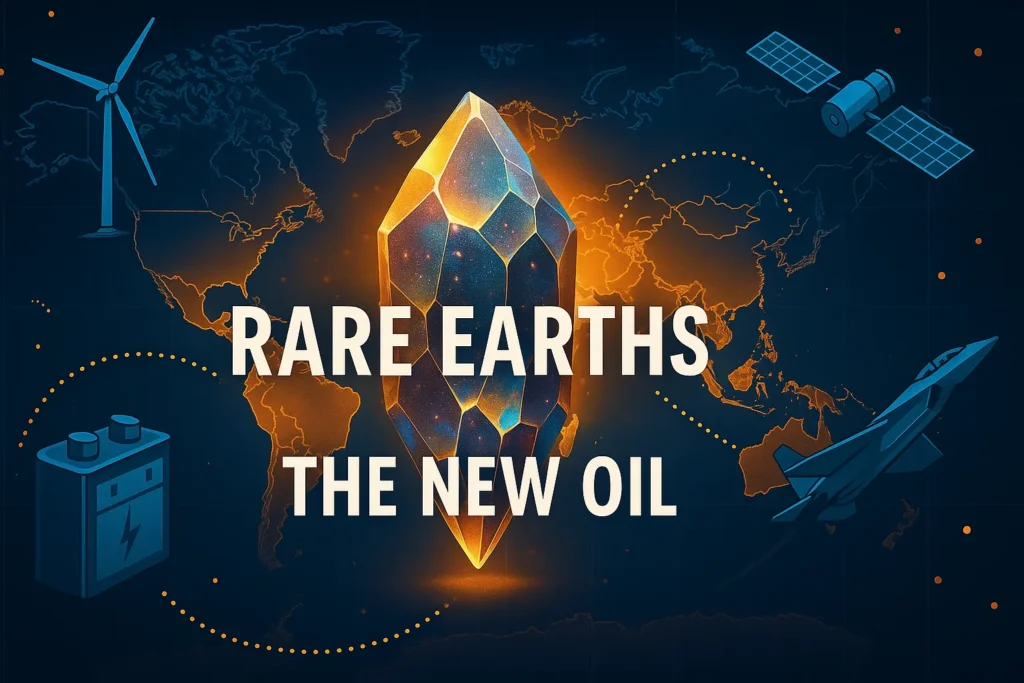
Rare earth metals may sound obscure, but they are at the heart of modern life—powering everything from smartphones and electric vehicles to fighter jets and renewable energy technologies. Increasingly, analysts describe them as the “new oil,” not because they fuel engines, but because they drive economies, technological dominance, and national security. As global demand soars, the geopolitics of rare earth elements (REEs) is turning into one of the most critical battlegrounds of the 21st century.
What Are Rare Earth Metals?
Rare earth metals are a group of 17 elements, including neodymium, dysprosium, and terbium. Despite the name, they are relatively abundant in the Earth’s crust. What makes them “rare” is the difficulty of extraction and processing, which requires complex and often environmentally harmful methods.
Why Are They Important?
- Electronics: Smartphones, laptops, and advanced semiconductors.
- Energy: Wind turbines, solar panels, and electric vehicle (EV) batteries.
- Defense: Guided missiles, fighter jets, and satellite systems.
- Healthcare: MRI machines and other diagnostic technologies.
Rare Earth Metals: The New Oil
Parallels with Oil
- Strategic Resource: Like oil in the 20th century, rare earths are central to modern industries.
- Supply Chain Dependence: A few nations dominate production and refining, creating vulnerabilities.
- Geopolitical Leverage: Control over rare earths gives countries bargaining power in trade and diplomacy.
China’s Dominance
China controls over 60% of rare earth mining and nearly 90% of global processing capacity. This monopoly has allowed Beijing to influence markets and leverage rare earth exports in geopolitical disputes—for instance, during tensions with the U.S. and Japan.
Global Race for Rare Earths
United States & Western Nations
- Supply Diversification: The U.S., EU, and allies are investing in mining projects in Australia, Canada, and Africa.
- Recycling: Developing technologies to recover REEs from e-waste.
- Defense Strategy: The Pentagon has prioritized securing domestic supply for military applications.
Emerging Players
- Australia: A leading non-Chinese producer with major projects like Lynas Rare Earths.
- Africa: Countries such as Burundi, Madagascar, and Tanzania are attracting investments.
- India & Vietnam: Building processing capabilities to challenge China’s dominance.
Economic and Environmental Challenges
High Costs
Extracting and processing rare earths is capital-intensive, which discourages new entrants.
Environmental Damage
The refining process generates toxic waste, raising sustainability concerns. Countries face the dilemma of balancing economic benefits with environmental risks.
Technological Barriers
Advanced processing know-how is concentrated in China, making it difficult for others to catch up quickly.
Geopolitical Implications
Trade Wars & Supply Chains
- Rare earths have been used as bargaining chips in U.S.–China trade disputes.
- Export restrictions can cause global price shocks.
National Security Risks
Countries dependent on imports risk supply disruptions in times of conflict. Securing domestic supply has become a matter of defense planning.
Energy Transition & Climate Goals
Green technologies depend heavily on REEs. Nations racing to meet net-zero goals cannot afford supply chain bottlenecks.
Future Outlook: Cooperation or Competition?
Scenarios Ahead
- Resource Nationalism: Countries may hoard supplies for domestic industries.
- Alliances: Western nations may form supply chain coalitions.
- Innovation: Advances in recycling and substitutes could reduce dependence.
Who Will Win the Rare Earth Race?
The future will likely be shaped by how fast alternative sources emerge and whether countries can reduce reliance on China without sparking resource conflicts.
Conclusion
Rare earth metals are truly the “new oil” of the 21st century—essential for technology, defense, and clean energy. Their geopolitical significance lies not just in scarcity, but in who controls supply chains. The global competition over rare earths reflects larger power struggles between nations, making them one of the defining resources of our era.
FAQ’s
1. Why are rare earth metals called the “new oil”?
Rare earth metals are vital to modern industries—similar to oil in the 20th century. They power electronics, renewable energy, and defense technologies, making them strategically critical for nations.
2. Which country dominates rare earth production?
China leads globally, controlling over 60% of mining and nearly 90% of processing capacity, giving it massive geopolitical influence.
3. Can we recycle rare earth metals?
Yes, technologies are emerging to recycle REEs from e-waste and industrial waste. However, large-scale recycling is still limited due to high costs and technical challenges.
4. Are there alternatives to rare earth metals?
Researchers are developing substitutes for some REEs in magnets and batteries, but most alternatives are less efficient, making rare earths hard to replace.
5. What are the environmental impacts of rare earth mining?
Mining and processing rare earths generate toxic waste, radioactive byproducts, and significant ecological damage, raising concerns about sustainability.
6. Which countries are investing in rare earth supply chains besides China?
The U.S., Australia, Canada, India, Vietnam, and several African nations are actively expanding mining and refining projects.
7. How do rare earth metals affect national security?
Defense systems like fighter jets, drones, and precision-guided weapons rely on rare earths. A disrupted supply chain could directly impact military readiness.
Disclaimer
This blog is for educational purposes only and does not provide financial, investment, or geopolitical advice. Readers are encouraged to conduct further research before drawing conclusions.
Internal Link :-
- Best Home Workouts Without Equipment: Build Strength Anytime, Anywhere
- 7-Day Healthy Meal Plan for Beginners: Simple & Delicious Recipes
- Sleep Smarter: The Best Time to Go to Bed at Every Stage of Life
- Top 10 Supplements for Energy and Focus: Boost Productivity Naturally
- Goel Construction Company Ltd IPO: GMP, Price Band, Allotment, and Listing Details



Can you be more specific about the content of your article? After reading it, I still have some doubts. Hope you can help me.