Explore how virtual influencers—AI-generated digital personalities—are taking over social media. Learn their benefits, real-world examples, marketing power, and why brands are investing in them.
Introduction
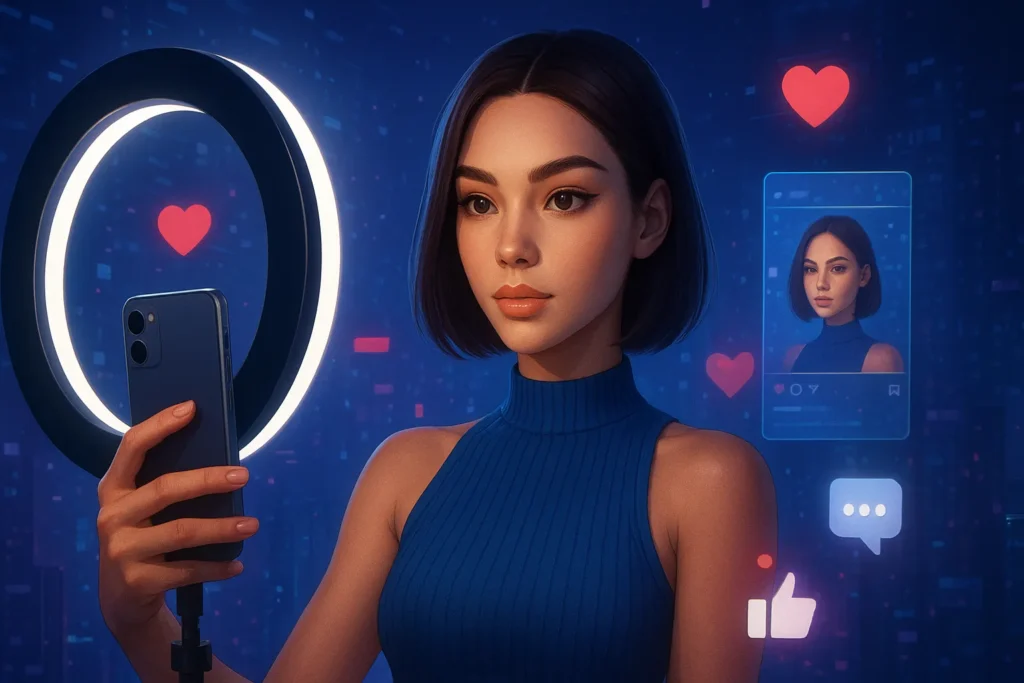
The age of celebrity is changing. No longer confined to Hollywood or YouTube, today’s most engaging stars may not even exist in the physical world. Welcome to the era of virtual influencers—AI-generated or CGI-created personalities who dominate Instagram, TikTok, and YouTube with lifelike content and massive followings.
From fashion modeling to brand endorsements, these digital beings are revolutionizing marketing, entertainment, and pop culture. But how real are they? And why are brands choosing virtual over human influencers?
Let’s explore the rise, power, and future of these AI celebrities reshaping the internet.
What Are Virtual Influencers?
A virtual influencer is a computer-generated digital persona created using 3D modeling, AI, and storytelling. These influencers look and act like real humans, often complete with backstories, emotions, and evolving lifestyles.
They post on social media, engage with followers, and collaborate with brands—just like human influencers. The difference? Every move they make is scripted, controlled, and optimized by creative teams or AI systems.
How Virtual Influencers Work
Virtual influencers are crafted by digital artists, AI engineers, and marketing strategists. Their creation involves:
- 3D Modeling & Animation: Designing lifelike faces, bodies, and movements.
- AI-Powered Scripts: Using language models (like ChatGPT) to craft captions and dialogues.
- Storytelling: Building personalities, goals, and fictional story arcs.
- Social Media Management: Posting regularly across platforms for brand engagement.
Some virtual influencers even evolve autonomously through AI learning, analyzing engagement and adapting style accordingly.
Famous Virtual Influencers of the Modern Era
1. Lil Miquela
- Over 2.5 million Instagram followers
- Collaborated with Prada, Samsung, and Calvin Klein
- Known for promoting social causes like Black Lives Matter
2. Imma
- Japanese virtual influencer featured in Vogue Japan
- Collaborates with IKEA and Puma
- Known for her artistic and futuristic style
3. Shudu Gram
- World’s first digital supermodel
- Featured in Vogue, Harper’s Bazaar, and Balmain campaigns
4. Lu Do Magalu
- Brazilian digital persona with millions of followers
- Used by brands like Magazine Luiza for product marketing
These virtual stars aren’t science fiction—they’re mainstream marketing assets for global brands.
Why Brands Love Virtual Influencers
1. Total Control
Brands can design every aspect—personality, image, and messaging—eliminating risks like scandals or controversies.
2. Cost Efficiency
No travel, photoshoots, or unpredictable schedules—virtual influencers operate 24/7.
3. Global Reach
They appeal to audiences worldwide without language or cultural barriers.
4. Endless Creativity
They can appear anywhere, wear any outfit, or collaborate with anyone in virtual settings.
5. Future-Proof Branding
Associating with cutting-edge technology boosts a brand’s innovation image.
How Virtual Influencers Are Changing Marketing
Hyper-Personalized Engagement
AI algorithms analyze user preferences to craft tailored content that resonates with each audience segment.
Enhanced Storytelling
With fictional narratives, virtual influencers create immersive brand experiences, blending entertainment with marketing.
Cross-Reality Campaigns
Brands use them in AR/VR environments, metaverse events, and digital fashion shows.
Impact on the Influencer Economy
The global influencer marketing industry exceeded $20 billion in 2024, and virtual influencers are rapidly claiming a share. Analysts predict that by 2030, over 40% of campaigns will include virtual personas.
They offer a blend of realism and fantasy that captivates Gen Z and Gen Alpha—audiences born into a digital-first world.
Ethical and Social Concerns
Despite the hype, virtual influencers raise critical questions:
- Authenticity: Can audiences trust endorsements from AI-generated figures?
- Psychological Impact: Do they distort perceptions of reality and beauty?
- Transparency: Should brands disclose when content is AI-generated?
- Job Displacement: Will they replace human influencers?
As technology evolves, regulations may require AI disclosure labels to maintain transparency.
The Future of Virtual Celebrities
We’re entering an era where AI-driven influencers might:
- Host live virtual concerts
- Launch their own digital brands
- Appear in films, games, and metaverses
- Form relationships with fans using AI chatbots
The boundary between reality and simulation will continue to blur—reshaping how we define fame, influence, and authenticity.
Conclusion
Virtual influencers represent the next stage of digital evolution—combining creativity, technology, and marketing. They are cost-effective, risk-free, and globally scalable, making them a powerful tool for modern brands.
Whether you admire or question them, one thing is certain: the celebrity of tomorrow may not be human at all.
FAQ’s
1. What is a virtual influencer?
A virtual influencer is a computer-generated persona designed to act like a human influencer on social media, often managed by AI or creative teams.
2. Who is the most famous virtual influencer?
Lil Miquela is one of the most popular, with millions of followers and collaborations with major fashion brands.
3. Why do brands use virtual influencers?
They offer full creative control, no controversies, lower costs, and global appeal—making them ideal marketing partners.
4. Are virtual influencers real people?
No, they are digital creations, though managed by real teams or AI systems that craft their content and interactions.
5. How do virtual influencers earn money?
They earn through brand deals, sponsorships, product placements, and digital campaigns, just like human influencers.
6. Will virtual influencers replace humans?
Not entirely. They will complement human influencers, offering unique storytelling and branding opportunities.
7. How can businesses create a virtual influencer?
Brands can hire digital design agencies or use AI tools to build lifelike characters integrated with marketing strategies.
Disclaimer
This blog is for educational purposes only. It does not provide legal or financial advice. Readers should conduct independent research before making business or marketing decisions.
Internal Link :-
- AI in Content Creation: Essential Tools for Writers, Designers & Marketers
- Best Budget Tech Gadgets Under 1000 Rupees (2025)
- AI vs. Human Creativity: Who Wins in 2025 and Beyond?
- Must-Have Chrome Extensions Powered by AI in 2025
- Complete iPhone 17 Series Review: Is It Truly Worth the Upgrade?
- Best Free AI Tools You Can Start Using Today


Thanks for sharing. I read many of your blog posts, cool, your blog is very good. https://accounts.binance.info/register-person?ref=IHJUI7TF