Explore the debate of AI vs. human creativity. Learn how artificial intelligence enhances, challenges, and coexists with human imagination in the creative world.
Introduction
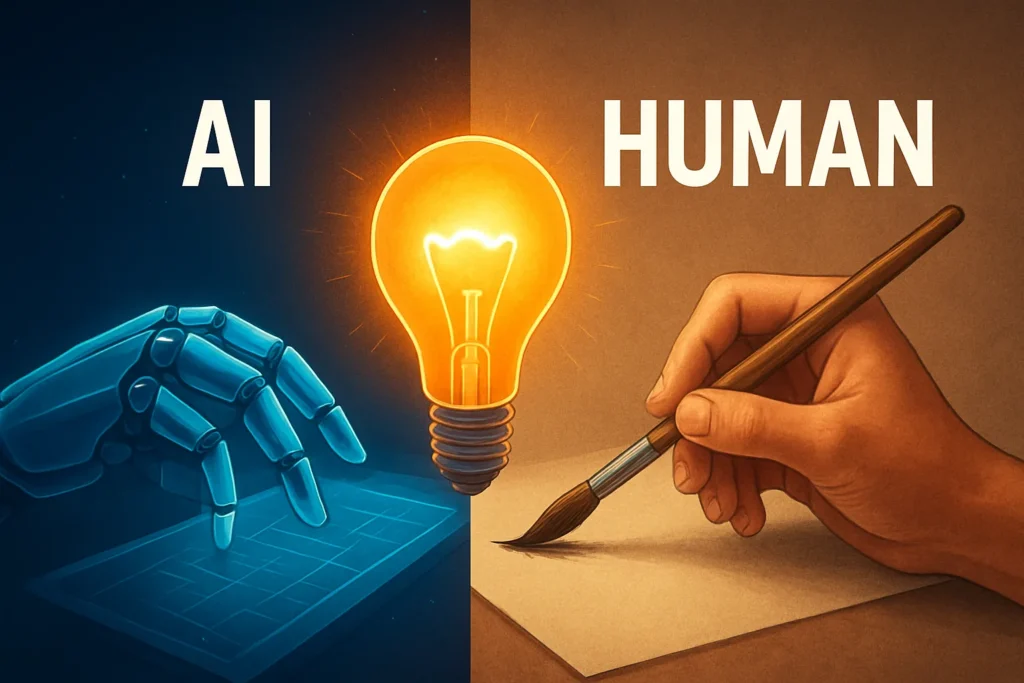
Artificial Intelligence (AI) has taken center stage in nearly every industry—from business to healthcare to the arts. But when it comes to creativity, an age-old question arises: Can AI truly rival human imagination?
Creativity has long been considered a uniquely human trait, shaped by emotions, experiences, and cultural influences. Yet, with the rise of AI tools that generate music, write poetry, paint digital art, and even script films, many are wondering whether machines can outperform us in our most human skill—creativity.
This blog dives into the fascinating debate of AI vs. Human Creativity, exploring their strengths, weaknesses, and the possible future where both might collaborate instead of compete.
Understanding Creativity: Human vs. AI
What Is Human Creativity?
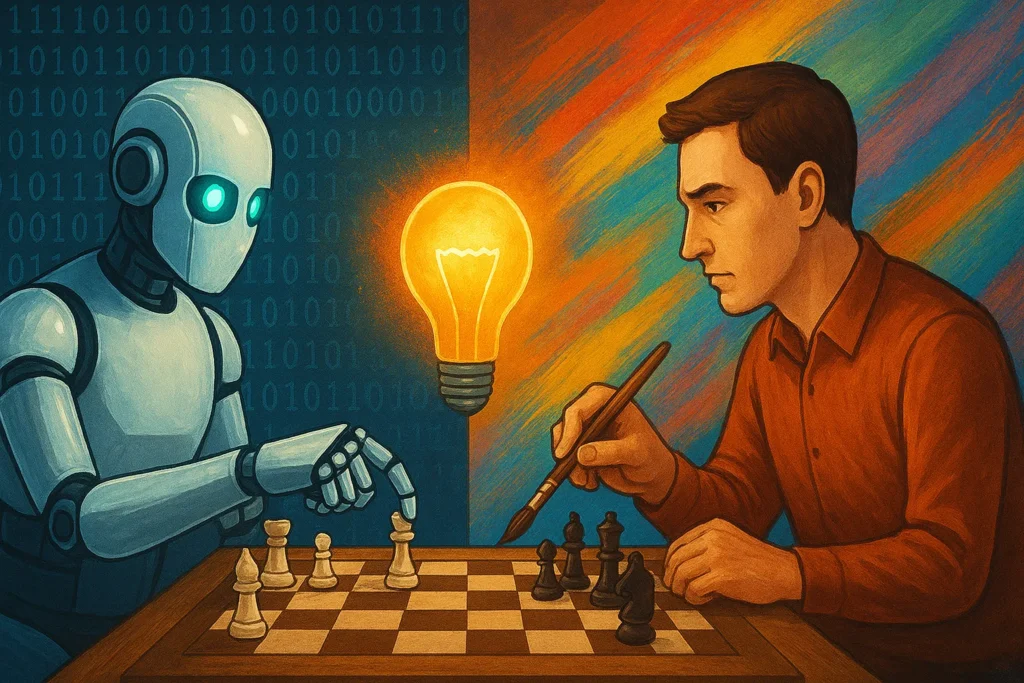
Human creativity is the ability to generate unique ideas, solve problems, and express emotions through art, writing, design, or innovation. It thrives on imagination, lived experiences, empathy, and cultural context.
Example:
When Shakespeare wrote his plays, they weren’t just words—they reflected human emotions, struggles, and the society of his time.
What Is AI Creativity?
AI creativity is machine-generated output based on algorithms, data patterns, and training models. AI doesn’t “feel,” but it can analyze vast amounts of information and produce content that mimics human creativity.
Example:
AI art generators like DALL·E or MidJourney create breathtaking images in seconds, but they rely on existing datasets and patterns.
Strengths of Human Creativity
1. Emotional Depth
Humans draw from emotions like love, fear, and hope to create stories, art, or music that deeply connect with others.
2. Cultural Context
Human creativity reflects traditions, values, and cultural identity—something AI cannot authentically replicate.
3. Innovation Beyond Patterns
While AI follows data, humans can think outside the box and imagine things that don’t yet exist.
Benefit: Human creativity drives innovation that changes society, from the invention of the airplane to the smartphone.
Strengths of AI Creativity
1. Speed and Efficiency
AI can generate thousands of ideas or designs in seconds, which humans cannot match.
2. Data-Driven Insights
AI processes massive datasets, identifying trends humans might overlook.
3. Accessibility
AI tools lower barriers to entry, enabling non-artists or writers to create music, artwork, or content easily.
Benefit: Businesses and individuals save time and resources while experimenting with new creative ideas.
The Limitations of AI in Creativity
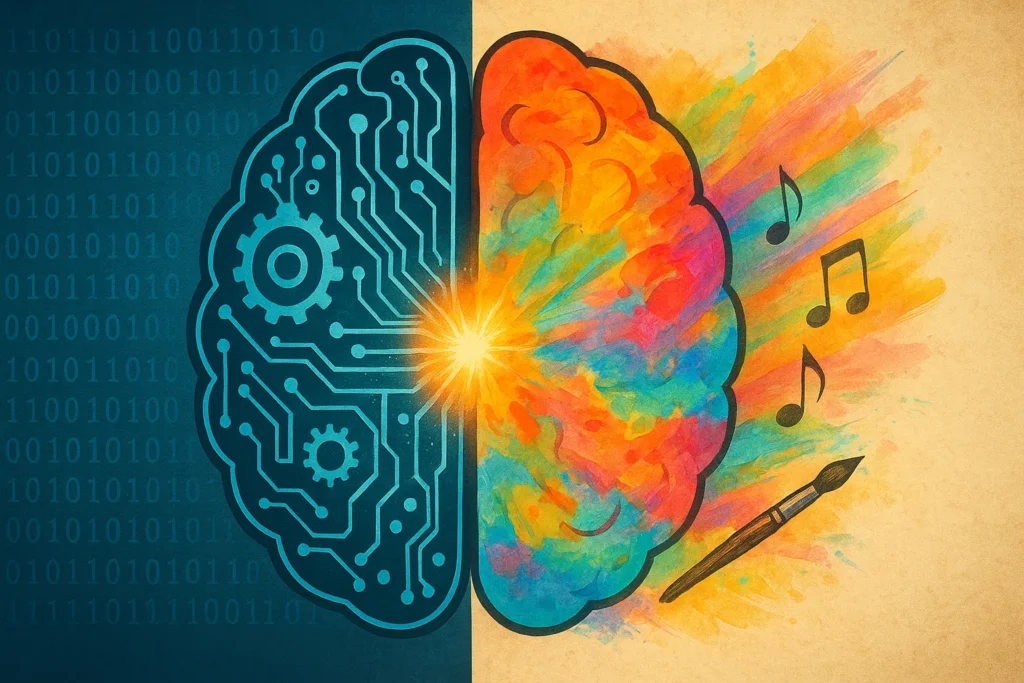
- Lack of Emotions: AI can mimic emotional tone but doesn’t truly feel.
- Dependence on Data: AI creativity is limited to what it’s been trained on—no lived experiences.
- Ethical Concerns: Issues like plagiarism, originality, and ownership of AI-created content remain unsolved.
The Limitations of Human Creativity
- Time-Consuming: Creative work can take days, months, or years to perfect.
- Bias and Limitations: Human creativity is influenced by personal experiences and may lack objectivity.
- Scalability Issues: Unlike AI, humans cannot produce endless variations quickly.
AI and Human Collaboration: The Future of Creativity
Instead of viewing AI and human creativity as rivals, the future likely lies in collaboration.
1. Co-Creation
Artists, writers, and designers can use AI as a tool to brainstorm ideas or enhance their work.
- Example: A fashion designer uses AI to generate multiple design concepts, then refines them with their unique vision.
2. Expanding Access to Creativity
AI tools make creativity more inclusive, giving opportunities to people without formal training.
- Example: A student can use AI music tools to create songs without knowing how to play instruments.
3. Innovation Through Synergy
AI provides data-driven ideas while humans infuse them with emotional depth and meaning.
So, Who Wins?
The short answer: neither—and both.
AI cannot replace human creativity because it lacks emotional depth, context, and true originality. However, humans can no longer ignore AI’s speed, scale, and ability to enhance productivity. The winner isn’t AI or humans, but the partnership between them.
Think of it this way: AI is the brush, but humans are the artists holding it.
Conclusion
The debate of AI vs. Human Creativity isn’t about one replacing the other—it’s about finding balance. AI brings efficiency and scale, while humans bring heart and meaning. Together, they create a future where imagination has no limits.
Instead of asking who wins, perhaps the better question is: How can AI and humans win together?
FAQ’s
1. Can AI be truly creative?
AI can mimic creativity by generating art, music, and writing, but it lacks emotions and original human experiences that fuel true creativity.
2. Will AI replace human artists and writers?
AI won’t fully replace humans but will change how creatives work. It’s more of a tool to enhance rather than eliminate human creativity.
3. What are the biggest advantages of AI creativity?
Speed, scalability, and data-driven insights are AI’s biggest strengths in creative industries.
4. What are the biggest advantages of human creativity?
Humans excel at emotional depth, cultural relevance, and thinking outside the limits of data.
5. How can AI and humans work together creatively?
AI can handle repetitive or large-scale tasks, while humans add storytelling, emotion, and originality—making the partnership powerful.
6. Is AI-generated art considered original?
This is still debated. AI art is based on existing data, raising questions of ownership, originality, and ethics.
7. What industries benefit most from AI creativity?
Marketing, design, entertainment, education, and content creation industries benefit greatly from AI-powered creative tools.
Disclaimer
This blog is for educational purposes only and should not be considered professional or legal advice. Always verify facts and consult experts before making decisions related to AI or creative industries.
Internal Link :-
- GPT-5 and Apple Intelligence Power iPhone 17 as Apple Declares Older iPhones Vintage
- Best AI Tools for Students in 2025: Boost Productivity, Learning & Creativity
- ChatGPT Alternatives You Should Try in 2025
- Top 10 Gadgets Under $100 That Make Everyday Life Easier
- How to Use AI to Save Time at Work: Smart Tools & Strategies


Who wins in the creativity showdown? Honestly, AI cant *feel* the way I do when I finally perfect a meme, and I definitely cant process data as fast as MidJourney can whip up a dog wearing a top hat. But lets be real, AI is great at brainstorming endless cat photos, while Im the one who actually *chooses* which one makes us laugh. The future isnt AI vs. humans; its AI being our super-efficient, slightly emotionless brainstorming buddy. Think of it like a chef – AI gathers all the ingredients (data), but I do the actual cooking (adding the soul and making sure it doesnt taste like data overload). So, partnership it is! AI handles the speed, I handle the questionable life choices that fuel true creativity. Win-win!ai ease watermark remover