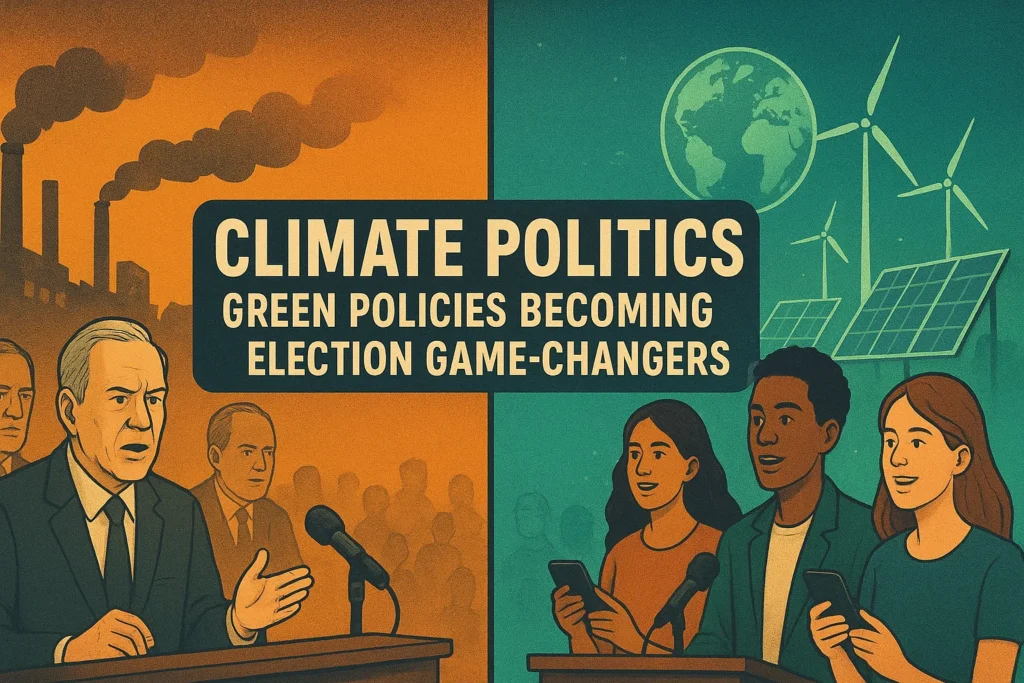
Explore how climate politics and green policies are shaping elections worldwide, influencing voter choices, party agendas, and future governance.
Introduction
Climate change is no longer a distant threat—it is a present reality. From rising sea levels to wildfires and extreme weather, its impact is visible across the globe. In recent years, climate politics has emerged as a defining factor in elections, with green policies becoming vote-changers for both young and progressive electorates.
Political parties worldwide are recognizing that voter priorities are shifting toward sustainability, clean energy, and climate justice. Green policies are not just about protecting the environment—they are about jobs, health, economy, and survival. This makes climate politics one of the most important election issues of our time.
The Rise of Climate Politics in Elections
Why Climate Is Becoming a Political Priority
- Public Awareness: Global movements like Fridays for Future have brought climate issues into mainstream politics.
- Economic Relevance: Renewable energy jobs, green investments, and carbon taxes directly impact economies.
- Generational Demand: Millennials and Gen Z prioritize climate-friendly governance over traditional promises.
Example: In Germany, the Green Party gained massive popularity in elections, positioning climate change as the central issue.
How Green Policies Are Reshaping Elections
1. Renewable Energy as a Campaign Promise
- Transition to solar, wind, and hydropower is becoming a key pledge in political manifestos.
- Countries like India and the U.S. highlight clean energy investments to attract eco-conscious voters.
- Benefit: Creates jobs while reducing carbon footprints.
2. Climate Justice & Equity
- Green politics goes beyond the environment—it also focuses on protecting vulnerable communities affected by climate change.
- Example: In the U.S., the Green New Deal emphasizes social equity alongside sustainability.
- Benefit: Appeals to socially progressive voters who want inclusive policies.
3. Carbon Neutrality Commitments
- Political campaigns are increasingly centered around net-zero emission targets.
- Example: The European Union’s Green Deal promises climate neutrality by 2050.
- Benefit: Positions leaders as forward-thinking and globally responsible.
4. Climate-Proof Infrastructure & Disaster Management
- Governments promising strong disaster resilience measures gain public trust.
- Example: Japan and Bangladesh highlight disaster preparedness in their policies.
- Benefit: Voters see immediate value in safety and resilience.
5. Youth Mobilization Through Climate Movements
- Young activists and digital campaigns are reshaping political discourse.
- Example: Greta Thunberg’s activism has pressured politicians to adopt bolder climate policies.
- Benefit: Engages first-time voters and younger demographics.
Benefits of Climate Politics in Democracy
- Increased Voter Engagement: Citizens feel connected to urgent issues.
- Future-Oriented Governance: Policies align with long-term sustainability.
- Stronger Global Reputation: Countries adopting climate-friendly policies gain international credibility.
- Economic Growth: Renewable energy and green industries open new opportunities.
- Social Justice: Protects marginalized communities from climate impacts.
Challenges in Climate Politics
Economic Pushback
Fossil fuel industries resist green policies due to economic interests.
Greenwashing Concerns
Some parties use climate-friendly slogans without real policy commitments.
Political Polarization
Climate policies often divide voters along ideological lines.
Implementation Gaps
Bold promises may lack proper funding or execution.
Global Examples of Climate Politics Impacting Elections
- Germany: The Green Party’s success demonstrates the power of climate-centered campaigns.
- United States: Climate policies were a major factor in debates during the Biden–Trump election.
- Australia: Voter anger over bushfire responses boosted climate-focused candidates.
- India: Solar energy and clean air initiatives are increasingly part of election manifestos.
The Future of Climate Politics
The future of democracy will be shaped by climate-driven governance.
- AI and Big Data will optimize energy policies.
- International Climate Agreements will influence domestic elections.
- Green Technology Investments will define economic strategies.
In the coming decade, no election will be complete without strong climate pledges. Politicians who ignore this shift risk losing relevance, while those who embrace it will drive sustainable leadership for generations to come.
Conclusion
Climate politics is no longer a niche agenda—it is the core of modern elections. From renewable energy to social justice, green policies are winning votes and shaping governance. While challenges like greenwashing and economic resistance remain, the growing demand for sustainable leadership ensures that climate will remain a game-changer in global politics.
Disclaimer
This blog is for educational purposes only and does not endorse or promote any political party, leader, or election campaign.
FAQ’s
1. What is climate politics?
Climate politics refers to the integration of climate change policies into political agendas, election campaigns, and governance strategies.
2. Why are green policies important in elections?
Green policies address urgent issues like climate change, renewable energy, disaster management, and social equity—making them a priority for voters.
3. Which countries have seen elections influenced by climate politics?
Germany, the U.S., Australia, and India are key examples where climate policies shaped election outcomes.
4. How do green policies benefit the economy?
They create jobs in renewable energy, reduce dependency on fossil fuels, and open new avenues in green technology industries.
5. What are the risks of climate politics?
Risks include greenwashing, political polarization, resistance from fossil fuel lobbies, and challenges in implementing promises.
6. Do young voters care more about climate issues?
Yes, Millennials and Gen Z are among the most climate-conscious demographics, making them strong supporters of green politics.
7. What is the future of climate politics?
It will focus on net-zero commitments, renewable energy expansion, and integrating sustainability with economic growth.
Internal Link :-
- Best Home Workouts Without Equipment: Build Strength Anytime, Anywhere
- 7-Day Healthy Meal Plan for Beginners: Simple & Delicious Recipes
- 10 Best Apps to Save Money in 2025: Smart Budgeting & Financial Freedom
- How to Start Investing with Just $100 in 2025
- Best Side Hustles for Beginners to Make $500/Month in 2025

I don’t think the title of your article matches the content lol. Just kidding, mainly because I had some doubts after reading the article.