Explore how the metaverse and virtual reality are reshaping industries. Learn how business owners can leverage these technologies for growth, innovation, and customer engagement.
Introduction
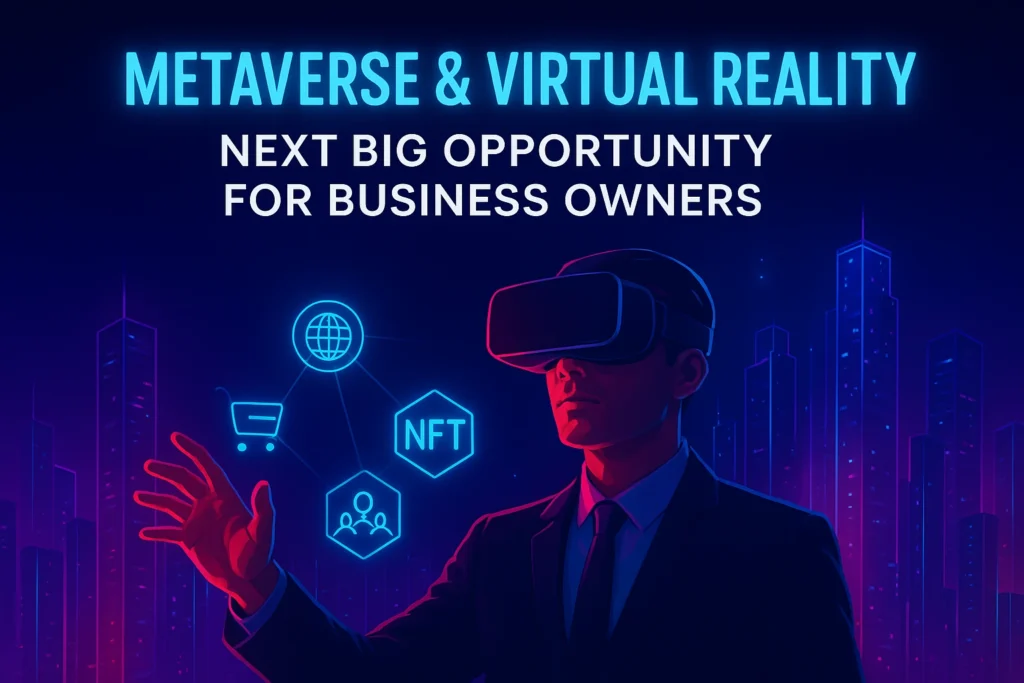
The digital world is evolving at lightning speed, and two technologies Metaverse and Virtual Reality (VR)—are redefining how people connect, work, and shop. What was once science fiction is now a multi-billion-dollar industry filled with opportunities for forward-thinking entrepreneurs.
For business owners, the metaverse and VR are not just futuristic buzzwords; they represent new revenue streams, customer engagement strategies, and branding opportunities. From virtual stores and digital real estate to immersive training and marketing, the potential is massive.
In this blog, we’ll explore the rise of the metaverse, the role of virtual reality, and how businesses can tap into these technologies to stay ahead of the competition.
What is the Metaverse?
The metaverse is a virtual world where people interact using digital avatars. Think of it as an extension of the internet—a space where social media, gaming, shopping, and work converge into immersive experiences.
Key Features of the Metaverse
- Persistent virtual environments (always active).
- Avatars representing real people.
- Blockchain-enabled ownership (NFTs, digital assets).
- Cross-platform accessibility (VR headsets, smartphones, AR glasses).
The Role of Virtual Reality in the Metaverse
Virtual Reality (VR) is the backbone of immersive experiences. With VR headsets, users can enter 3D environments that simulate reality. For businesses, this means creating interactive, lifelike customer experiences.
Examples
- Retail: Try on clothes virtually before buying.
- Real Estate: Virtual tours of homes.
- Education: Immersive training and simulations.
- Healthcare: Therapy and surgeries using VR simulations.
Opportunities for Business Owners in the Metaverse & VR
1. Virtual Stores & E-Commerce
Brands can build virtual showrooms where customers explore products in 3D.
- Example: Nike launched Nikeland in Roblox, blending gaming with shopping.
- Benefit: Better customer engagement and global reach.
2. Digital Real Estate & Virtual Spaces
Companies can buy or rent land in the metaverse to host events, stores, or brand activations.
- Example: Decentraland and Sandbox selling virtual plots.
- Benefit: Early movers get prime locations and brand visibility.
3. Immersive Marketing & Advertising
VR and metaverse allow businesses to create memorable campaigns.
- Example: Gucci sold a digital handbag in Roblox for more than its real-world price.
- Benefit: Unique brand storytelling and customer loyalty.
4. Virtual Events & Networking
Businesses can host conferences, concerts, and exhibitions in the metaverse.
- Example: Meta (Facebook) hosting VR meetings through Horizon Workrooms.
- Benefit: Reduced costs, global participation, and immersive networking.
5. Training & Skill Development
Industries like aviation, healthcare, and manufacturing use VR for employee training.
- Example: Walmart uses VR to train employees for real-world scenarios.
- Benefit: Safe, cost-effective, and highly engaging learning.
6. NFTs & Digital Collectibles
Businesses can create and sell NFTs as part of their brand experience.
- Example: Fashion brands selling NFT-based clothing.
- Benefit: New revenue streams and enhanced customer loyalty.
Benefits of Metaverse & VR for Businesses
- Global Accessibility: Reach audiences without physical limits.
- Enhanced Engagement: Interactive experiences outperform traditional ads.
- Brand Innovation: Early adoption signals modernity and relevance.
- Cost Efficiency: Virtual events reduce travel and logistics expenses.
- New Revenue Streams: NFTs, digital goods, and subscriptions.
Challenges to Consider
- High development costs for VR content.
- Limited accessibility due to expensive hardware.
- Security and privacy concerns in digital spaces.
- Regulatory uncertainties for digital assets.
Future Trends in the Metaverse & VR
- Metaverse Workspaces: Remote work in 3D offices.
- AI-Powered Avatars: Personalized digital assistants.
- Cross-Platform Integration: Seamless use across devices.
- Virtual Healthcare: Therapy, diagnostics, and training.
- Metaverse Education: Universities offering virtual campuses.
Conclusion
The metaverse and virtual reality are no longer futuristic concepts—they are here, creating real opportunities for business owners across industries. From virtual storefronts to immersive marketing campaigns, businesses that embrace these technologies will enjoy a competitive edge in the digital economy.
For entrepreneurs, now is the time to explore, experiment, and invest in the next big business frontier.
Disclaimer
This blog is for educational purposes only. It does not constitute financial, legal, or investment advice. Business owners should consult experts before making investment or strategic decisions.
FAQ’s
1. How can small businesses use the metaverse?
Small businesses can create virtual shops, host online events, or sell NFTs to reach global audiences.
2. What industries benefit the most from VR?
Retail, real estate, education, healthcare, and entertainment benefit greatly from VR innovations.
3. Is investing in metaverse real estate profitable?
It can be—early adopters have seen value appreciation, but risks remain due to volatility and regulation.
4. How expensive is it to build a VR business model?
Costs vary, but businesses can start small with virtual tours, basic VR experiences, or NFT drops before scaling.
5. Are the metaverse and VR only for big companies?
No. SMEs can also enter with affordable solutions like VR product showcases, online workshops, or collaborations.
6. What technologies power the metaverse?
Blockchain, VR, AR, AI, and 5G connectivity are the key enablers.
7. What is the future of VR and the metaverse for businesses?
The future holds virtual workplaces, AI-driven personalization, and global marketplaces for goods and services.
Internal Link :-
- Best Home Workouts Without Equipment: Build Strength Anytime, Anywhere
- 7-Day Healthy Meal Plan for Beginners: Simple & Delicious Recipes
- Sugs Lloyd IPO 2025 – Dates, Price Band, GMP, Allotment & Review
- Snehaa Organics IPO 2025 – Price Band, GMP, Subscription, Allotment & Detailed Review
- Goel Construction Company Ltd IPO: GMP, Price Band, Allotment, and Listing Details
Thanks for sharing. I read many of your blog posts, cool, your blog is very good.
Can you be more specific about the content of your article? After reading it, I still have some doubts. Hope you can help me. https://www.binance.info/uk-UA/register?ref=XZNNWTW7
Can you be more specific about the content of your article? After reading it, I still have some doubts. Hope you can help me. https://accounts.binance.info/en/register?ref=JHQQKNKN